
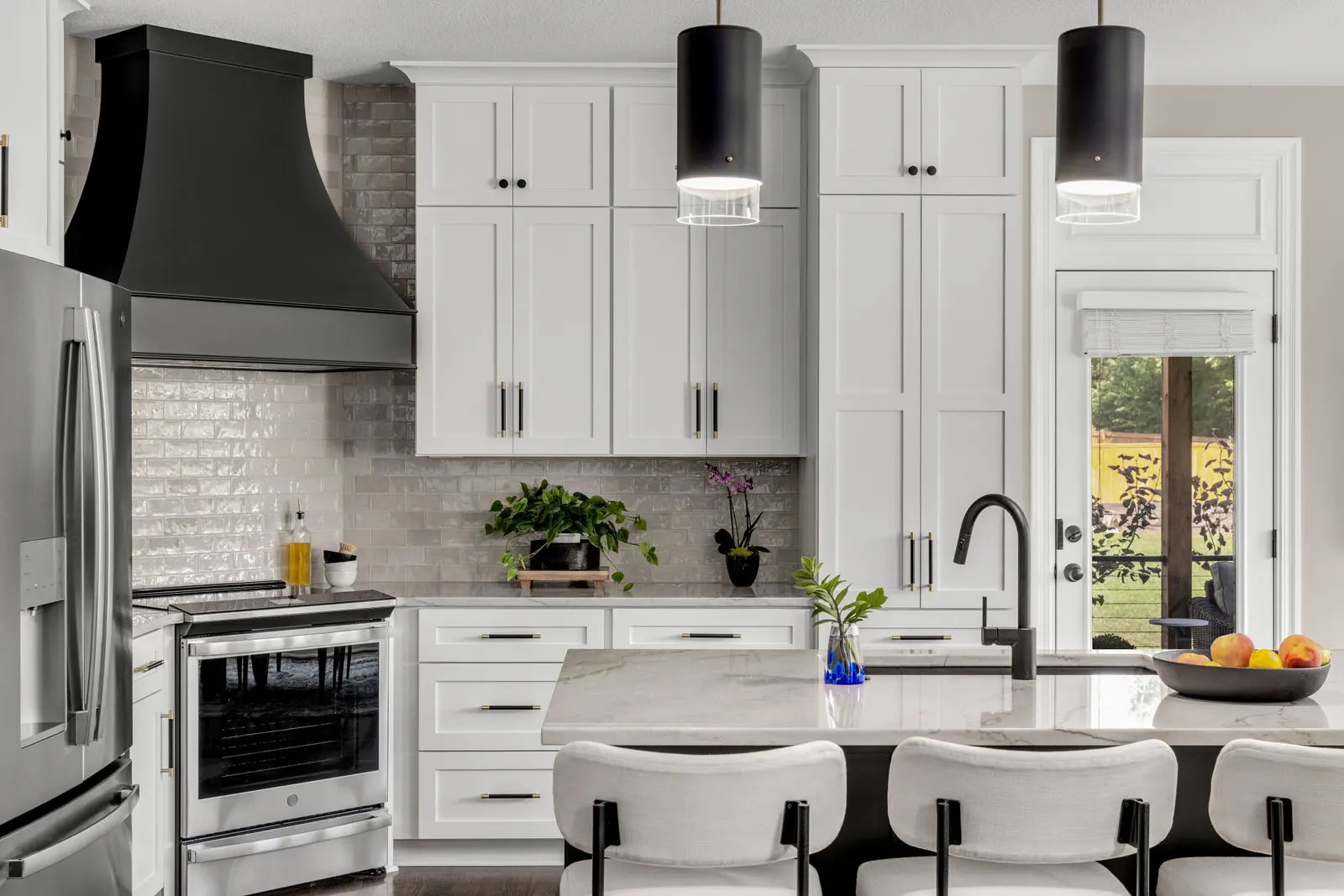
Inset doors sit flush inside a visible face frame. Full-overlay doors cover most of the face frame on a framed cabinet. Frameless cabinets skip the face frame altogether, which can leave a wider opening for drawers and pull-outs. Full overlay describes the door fit, so a frameless cabinet can have full-overlay doors too.
Inset, full overlay, and frameless at a glance
A face frame is the border attached to the front of a cabinet box. It helps to compare what you see with the doors closed and what you can reach with them open.
| Cabinet option | What you see when closed | What to check when open |
|---|---|---|
| Framed inset | Flush fronts outlined by the face frame | Clearance around each door and through the frame |
| Framed full overlay | Close-set fronts that hide most of the face frame | Usable opening behind the doors, including hinge clearance |
| Frameless | Close-set fronts with no face frame | Clear opening, drawer width, and room for pull-outs |
If you'd like more of the frame to show, Crown also offers standard overlay. See all four options in our cabinet door overlay guide.
Inset cabinets for a furniture-like look
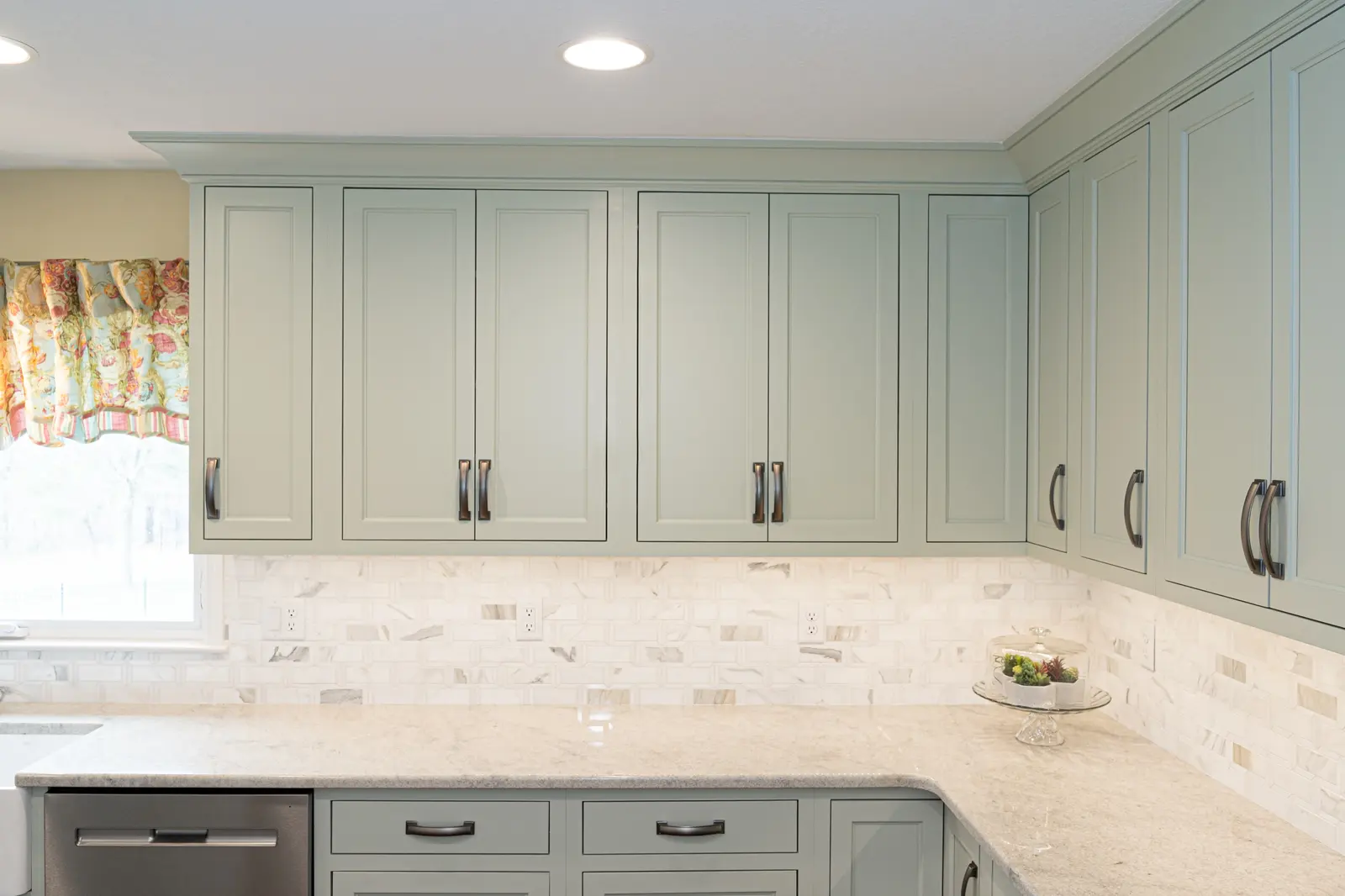
Inset doors and drawer fronts sit inside the face frame, so the frame outlines each opening. That detail can make a painted Shaker kitchen feel like built-in furniture, even with simple hardware.
The fit is part of the look. Each front needs a small, even gap to operate smoothly. Solid wood can swell or shrink as indoor humidity changes, so ask how the doors are fitted and how the hinges can be adjusted over time. For more on seasonal movement, see the U.S. Forest Service's guide to wood and moisture.
Full-overlay cabinets for less visible framing
On a framed full-overlay cabinet, the doors sit in front of the face frame and cover most of it. The narrow gaps give a run of cabinets a more continuous look. Open a door and you'll still see the frame, so measure the opening if you've got wide cookware or want a pull-out behind the door.
The white kitchen at the top of this guide pairs full overlay with Shaker fronts. The same construction can look different with a flat slab door or a more detailed raised panel. Compare cabinet door profiles and paint and stain finishes together so you can judge the whole cabinet front.
Frameless cabinets for a wider opening
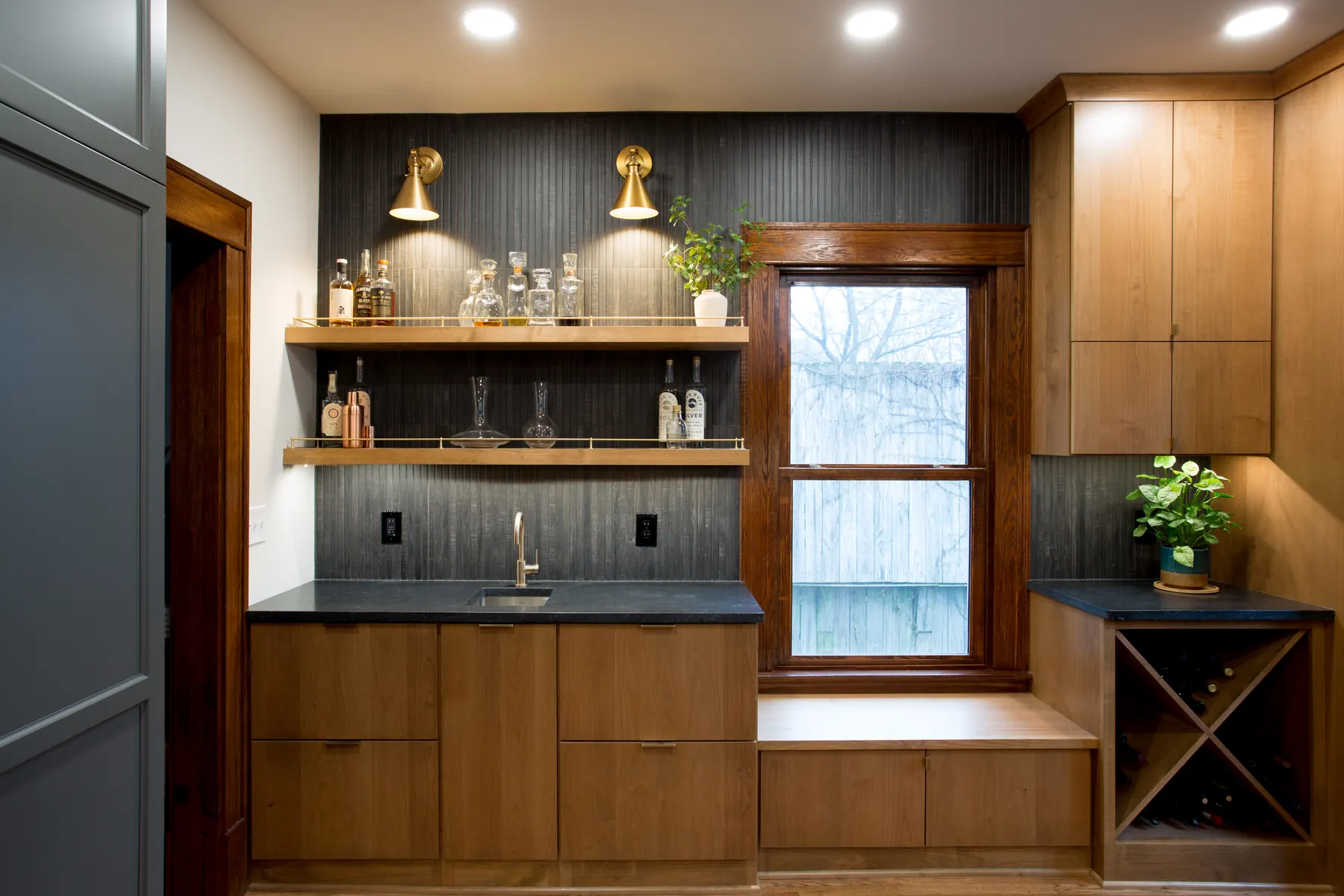
Frameless cabinets mount the hinges to the cabinet sides. With no face frame narrowing the front, a box of the same outside width can leave more room for a drawer or roll-out tray. The box sides, hinges, and slides still affect how much room you'll have.
Frameless cabinets are often paired with slab doors, but the box construction also works with profiled fronts. If you like the same look in framed full overlay, open both samples and compare where the hinges sit and how far the doors swing. Blum's cabinet hinge guide shows how mounting options vary for face-frame and frameless cabinets.
What to test before you choose
Open the cabinet as far as it would open in your kitchen. A wall, an appliance handle, or a nearby door can change how much of the opening you can use. Bring the dimensions of the biggest pan, mixer, or serving platter you want to store.
- Measure the clear opening. Check the narrowest point with the door open. For a drawer or pull-out, ask for its usable inside width. Compare storage options using those measurements.
- Try the hardware. Open a loaded drawer if you can. Ask how far the slides extend, how much weight they're rated for, and how the hinges can be adjusted.
- Look at what you'll wipe down. Inset cabinetry leaves more of the face frame exposed than full overlay. A slab front generally has fewer grooves to wipe than a decorative profile. Ask how to clean the finish you've chosen.
If you're comparing construction quality, ask about box materials, joinery, and how the cabinets are installed. The ANSI/KCMA kitchen and vanity cabinet standard (PDF) explains how the industry tests cabinet strength, door and drawer operation, and finishes.
Helpful answers
Common questions about inset, overlay, and frameless cabinets
How can I tell full-overlay framed cabinets from frameless cabinets?
Open a door and look at the front edge of the box. A framed cabinet has a separate border attached to the front. In a frameless cabinet, the opening starts at the cabinet sides, without that added border. The two can look nearly identical with the doors closed.
Do inset cabinets cost more than full overlay?
Inset often costs more because fitting each front inside its frame takes more precision. To see the difference for your kitchen, compare quotes with the same layout, door material, finish, and hardware.
Are frameless cabinets less durable than framed cabinets?
Either construction can hold up to daily use when it's well built and installed. Compare the box materials, how the panels are joined, and the hardware specifications for the cabinets you're considering.
Can I change my cabinet overlay with Crown's refacing service?
Crown's refacing service keeps the existing cabinet boxes and fits new doors to those frames. You can change the door profile and finish. If your goal is a different overlay or frameless construction, ask about new custom cabinetry.