
Crown Cabinetry
Walnut kitchen cabinetry with a broad island

Crown Cabinetry / Kansas City area

Leawood custom cabinets & considered refacing

Preserve the craftsmanship that still serves the room. Resolve the finish, proportion and functional details that don't.

Leawood, Kansas

Quality is something to inspect, not assume

Leawood's history includes its original neighborhoods as well as later development. The kitchen in front of you matters more than an address or a price category. An older, carefully made cabinet may deserve preservation; a newer cabinet may already limit the room. Crown's starting point is the construction and the design, not a presumption about what a Leawood homeowner should spend.

Local context: Leawood history

The detail that connects the room

Treat the finish as a whole-room decision

A cherry, red or orange-toned kitchen can feel dated even when its proportions still work. Start by deciding which wood surfaces remain: floors, beams, interior doors, a built-in or a paneled appliance. The new cabinetry needs a deliberate relationship with them, not necessarily an exact match.

Wood species, grain, existing finish and light affect how a sample reads. An online swatch can't establish a match. Compare physical samples near the retained millwork and at different times of day before making a final selection.

Compare wood species before choosing a finish
Tone
Separate the wood's natural color from the finish applied to it. Ask whether the goal is to reduce warmth, deepen the color or introduce a painted surface.
Grain
A stain sample on one species doesn't predict its appearance on another. Visible grain is part of the design, not an imperfection to hide after the color is chosen.
Sheen and light
Adjacent surfaces can look mismatched even when their color is close. Compare sheen, nearby lighting and the direction of the grain together.
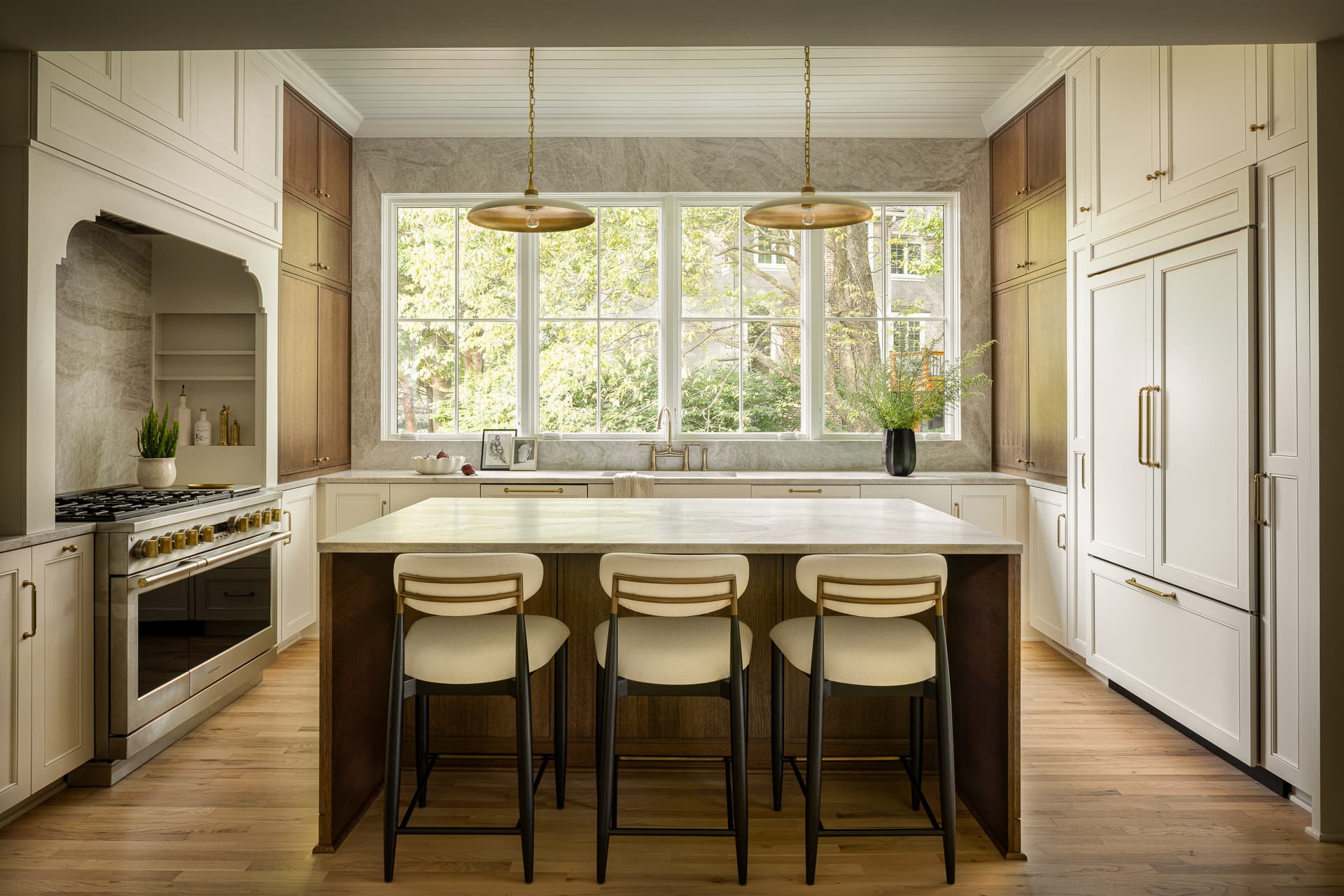
Sunlit Crown kitchen with brass pendant lighting
Crown work: cabinetry considered alongside lighting and surrounding finishes.

A technical assessment

Keep good construction for a reason

Solid joinery, secure installation and a useful interior are reasons to consider retaining cabinet boxes. Decorative fronts alone aren't proof of quality. Crown needs to evaluate the interiors, hinges, drawer operation and areas exposed to moisture before deciding that refacing is appropriate.

Keeping existing cabinetry can also preserve relationships with counters, flooring and architectural trim. Those benefits depend on the exact scope. If the cabinet dimensions force poor appliance placement or the structure needs extensive repair, new custom work may be the better investment in the room's function.

Evaluate the case for keeping or replacing the boxes

Resolve before ordering

The details that make replacement fronts a real design project

Furniture-style ends, appliance panels and closely fitted doors turn a cabinet update into a coordination exercise. A finish choice can't resolve a dimensional problem. Bring appliance specifications and photographs of existing details to the first design conversation.

01

Inset and overlay

Inset doors sit within the frame; overlay doors cover part or most of it. Changing that relationship affects reveals, hinges and the visual rhythm across a run.

An existing cabinet doesn't automatically support every door configuration. Verify the construction first.
02

Paneled appliances

Appliance panels must suit the specific appliance, including its attachment system and clearance requirements. A panel-ready label alone isn't enough to specify the cabinetry.

Confirm model numbers before approving door sizes, handle positions and surrounding fillers.

03

Furniture ends and millwork

Legs, columns, crown and finished backs need to align with the new fronts. Decide which details to preserve, simplify or rebuild as part of the same scope.

A quieter door profile can modernize a room without erasing the architectural elements that give it character.

Understand inset and overlay construction

Crown material studies

Contrast can be more convincing than an almost-match

An intentionally different island can connect to nearby wood without pretending to duplicate an aged finish. Repeating a handle finish or a cabinet proportion may be enough to create continuity. The right choice should survive a view from the adjoining room, not only a close-up of the sample.

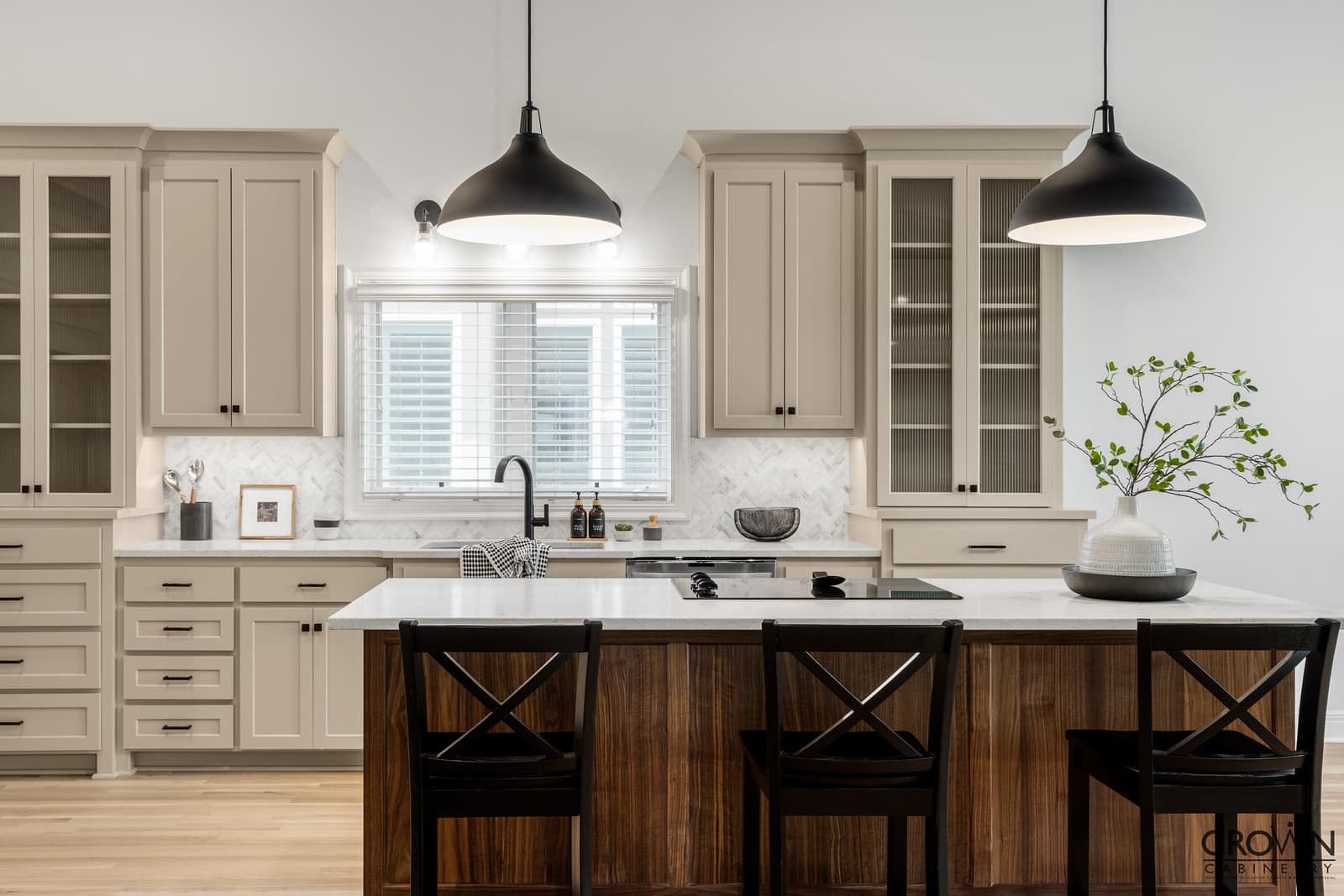
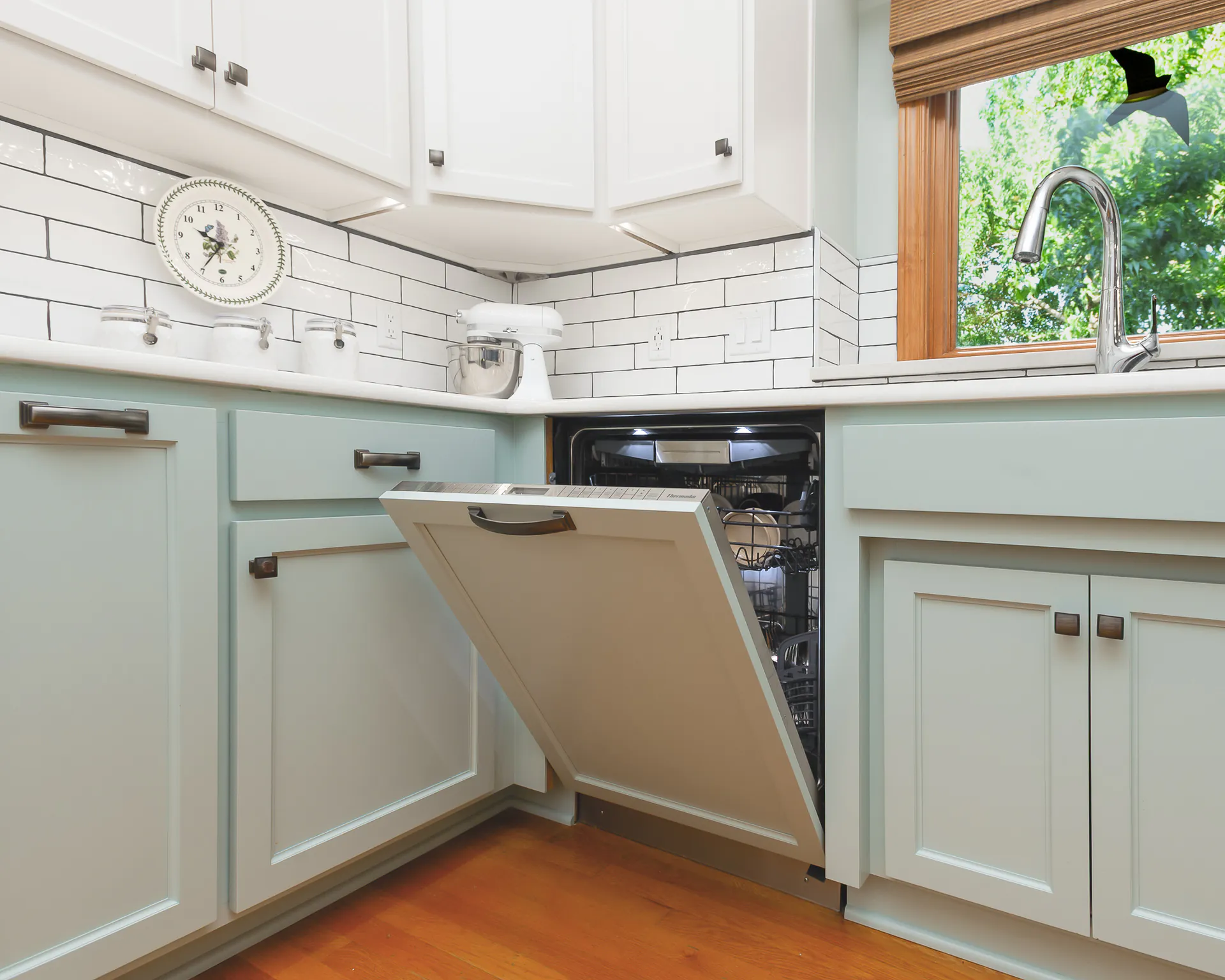
The walnut island below contrasts with the lighter perimeter without competing with every surrounding surface. A paneled dishwasher offers another kind of continuity: the appliance front participates in the cabinet design while still needing its own operating clearance.

Walnut island paired with light kitchen cabinets
Walnut and lighter cabinetry create a deliberate material contrast.
Open dishwasher with a cabinet-matched sage front panel
Crown detail: an appliance panel coordinated with the adjacent cabinetry.
Explore painted and stained cabinet finishes

Prepare a precise brief

What deserves to stay, and what needs a fresh start?

A useful consultation separates sentimental or architectural value from construction that still performs. Crown can discuss refacing, a fully custom kitchen or selected built-ins without making every part of the house conform to one treatment.

  1. 01

    Record the retained finishes

    Bring clear photos of adjoining millwork, floors and cabinetry. Note which pieces you're committed to keeping and which are open to change.

  2. 02

    Identify the technical constraints

    List appliance models, unusual door configurations and any specialty storage. Flag tight reveals or panels that have always been difficult to operate.

  3. 03

    Review a coordinated specification

    For new custom work, review Crown's drawings, dimensions and finish selections together. A beautiful elevation should also account for access, appliance operation and the way new work meets old.

Learn about Crown's custom design and shop process

Helpful answers

Finish, fit and preservation questions

01

Can Crown match the stained millwork elsewhere in my Leawood home?

Crown can evaluate a coordinated finish, but an exact match isn't something to promise from a photograph. Wood species, grain, age, prior finish and lighting all influence the result. Physical samples help establish whether a close match or an intentional contrast will be more convincing.

02

Is refacing appropriate for an expensive original kitchen?

Original cost isn't the deciding factor. If the boxes remain sound and the layout supports the way you cook, retaining them may make sense. If the room needs different dimensions, relocated appliances or extensive repairs, custom cabinetry can address problems that new fronts won't solve.

03

Can new cabinet fronts work with my paneled refrigerator?

They need to be evaluated against the refrigerator's model-specific panel and clearance requirements. Bring the model number and existing installation information. The panel, handle, adjacent doors and ventilation details should be coordinated before anything is fabricated.

04

Can a kitchen update include matching built-ins in another room?

It can include custom built-ins, with their own dimensions and functional requirements. A related finish or door detail can connect the rooms without repeating kitchen cabinetry everywhere. Discuss books, display pieces, equipment and concealed storage separately so the built-in fits its purpose.