
Keep what works
Refacing
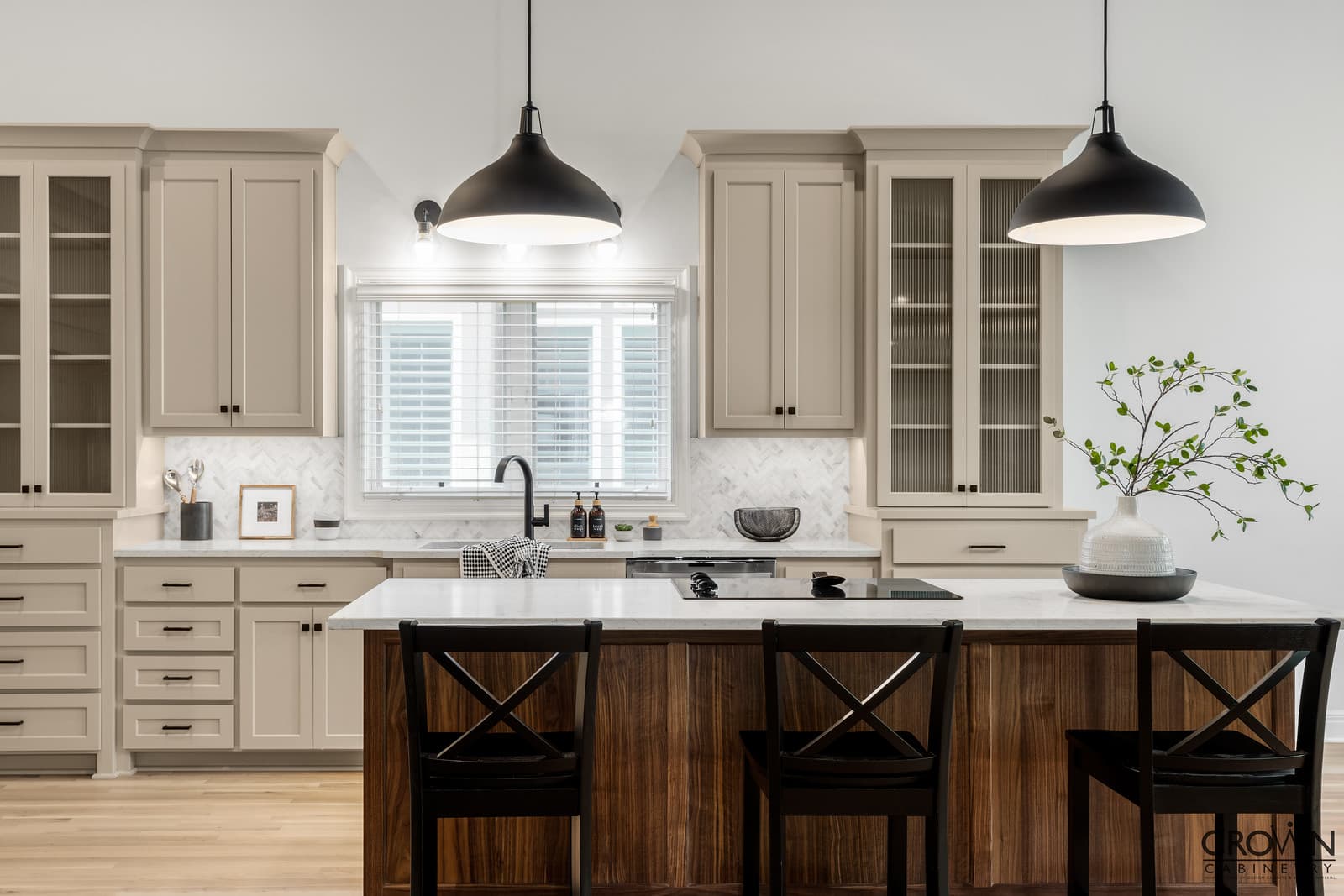
Everything you can see gets replaced: new doors, new drawer fronts, and new quarter inch solid wood on every exposed cabinet surface.
Your boxes, layout, countertops, backsplash, and flooring all stay where they are.
Making the call
We do both, so we've got no reason to talk you into either one.
The difference
The visible result can look equally complete either way. The difference is what stays in place and what you're free to change.
Start here
Sound boxes and a layout you like point to refacing. Failed boxes or a new layout point to replacing.
Keep what works
Everything you can see gets replaced: new doors, new drawer fronts, and new quarter inch solid wood on every exposed cabinet surface.
Your boxes, layout, countertops, backsplash, and flooring all stay where they are.
Start fresh
The old cabinets come out and new ones go in, built to your room's dimensions. The entire layout is on the table.
Countertops usually come off and often get replaced to suit the new configuration.
What actually changes
A Crown reface looks every bit as new as a replacement. The difference is what's being rebuilt behind the doors, and how much of the room has to move with it.
The finish
With either path
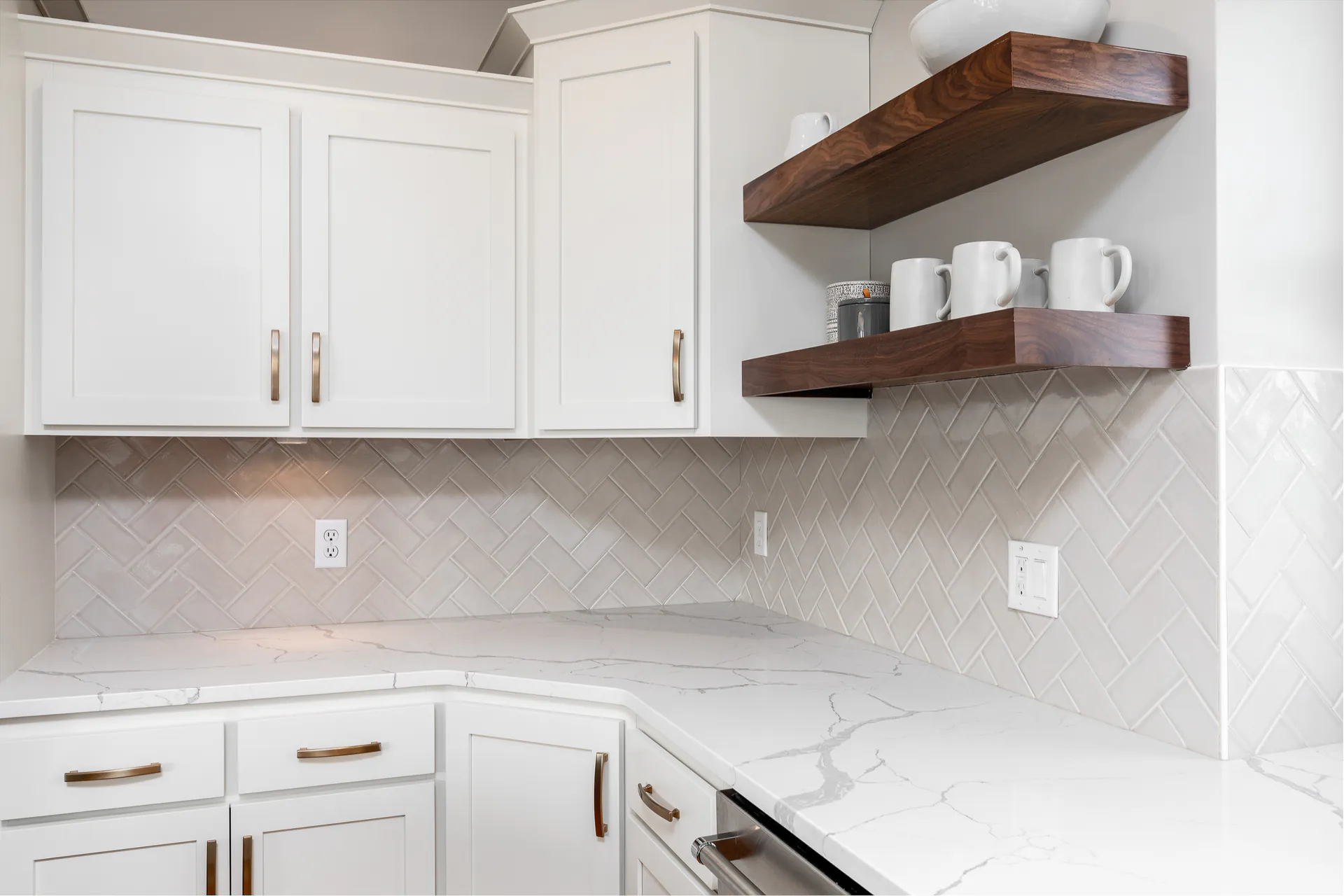
Choose from the same door styles, wood species, and finishes. The doors and drawer fronts are new in both cases, and the finish comes from the same department.
What that means
Refacing isn't a smaller menu or a lower-grade look. It changes the scope of the work, not the quality of the finish.
The structure
With refacing
Solid cabinet boxes stay in place. Crown rebuilds the visible faces with new doors, drawer fronts, and quarter inch solid wood surfaces.
With replacement
The old boxes come out and new cabinetry is built for the room from the inside out.
The room around it
With refacing
The layout, countertops, backsplash, and flooring stay in place, so the work stays focused on the cabinetry.
With replacement
New layout possibilities open up, but countertops usually come off and nearby surfaces can be disturbed in the process.
Choose refacing
If all five of those are true, refacing gives you a kitchen that reads as new for less money and less upheaval.
Choose replacement
Refacing a failing box is money spent on a nice face over a bad problem. If the structure is going, replace.
The money
You're not paying to rebuild what still works.
When the structure is sound, it stays in place instead of being rebuilt from scratch.
Refacing avoids the demolition, disposal, and reconstruction that a full replacement requires.
Countertops and surrounding finishes can usually stay in place, keeping the project focused on the cabinetry.
Typical Kansas City project
$18,000–$30,000
A Crown reface gives you the same new doors, wood, and finish. The sound cabinet structure behind them stays in place.
Helpful answers
That's what a lot of refacing is, and it's why the word has a reputation problem. Most companies apply a thin laminate or a vinyl film over your existing frames. We apply quarter inch solid wood, milled in our own plant. It can be sanded and refinished years from now, the same as any wood cabinet.
The doors and drawer fronts are new and identical to the ones on our custom work. The finish is done in the same department. What refacing can't change is the layout, so if what bothers you is where things are rather than how they look, refacing won't solve it.
Yes. The door style, wood species and finish are all completely open. It's only the overlay that's fixed.
Refacing runs eight to ten weeks from finalized design to delivery, then under two weeks of work in your house. A custom build runs ten to twelve weeks after design, and it's more disruptive while it's happening.