
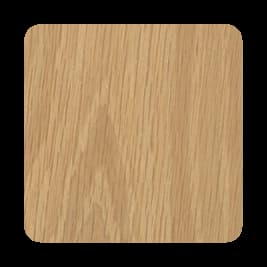
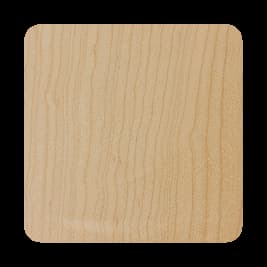
White oak is a strong choice when you want visible grain and texture in a stained or natural-looking kitchen. Maple is worth considering when you prefer a quieter grain pattern or a smooth painted appearance. Both can make durable cabinetry. Your decision should account for the finished sample, cabinet construction, and project price, not the species name alone.
If you are saving photos of pale wood kitchens, look closely before labeling them all white oak. Lighting, finish, wood selection, and the way the lumber is cut can produce noticeably different results. A photograph is a useful starting point, but it cannot specify the material for your kitchen.
Here is how to compare white oak and maple in a way that leads to a better decision.
Compare the finished appearance first
The broad distinction is grain. White oak generally has a more apparent pattern and a coarser texture. Maple has a finer texture and a more restrained grain, though individual boards still vary. The American Hardwood Information Center's guides to white oak and hard maple describe these natural differences.
| Consideration | White oak | Maple |
|---|---|---|
| Grain in the finished room | More visible texture and pattern | Generally finer and quieter |
| Natural color | Light through darker brown variation | Often pale or creamy, with possible reddish-brown variation |
| Painted appearance | Grain texture may remain apparent | Often chosen when a smoother appearance is the goal |
| Stain selection | Compare color and how it emphasizes the grain | Sample carefully, especially when changing to a deeper color |
| What to specify | Species, cut or grain selection, and finished sample | Exact maple material and finished sample |
| Price at Crown | Listed in a higher relative tier for refacing | Listed in a middle relative tier for refacing |
These are starting points, not a substitute for seeing the finished door. Crown's wood species guide includes both options, and its refacing cost guide explains their relative pricing in that service. Custom project pricing needs its own quote.
Why two white oak kitchens can look completely different
White oak identifies the wood. It does not fully describe the grain pattern you will see across a room.
The way lumber is cut affects that pattern. Plain-sawn material can show broader arches, often described as cathedral grain. Rift-sawn material is associated with a straighter, more linear appearance. Quartersawn oak can show distinctive ray figure along with a different grain presentation. The American Hardwood Information Center explains how sawing methods change the grain and material yield.
Those distinctions are especially noticeable on an island or a long cabinet run. If your favorite photo has very straight, quiet grain, specify that visual goal. Ordering white oak without discussing grain selection may produce a different result than you expect.
Ask the designer which cuts and grain selections are available for the proposed door construction. Confirm any added cost and lead time. Do not assume every white oak option is part of the same offering.
Also look at the direction of the grain. On a framed door, the horizontal and vertical pieces meet in different directions. A slab front has a different visual effect. Choose the wood alongside the door profile, rather than treating them as unrelated selections.
When maple deserves a closer look
Maple is useful when you want wood cabinetry that gives other materials room to stand out. A quieter cabinet face can work well beside a strongly patterned counter, textured backsplash, or prominent wood floor.
It is also a practical starting point for a painted design. If the main goal is a smooth painted surface, paying extra for a grain pattern you intend to conceal may not be the best use of the budget. Ask about the actual construction of the proposed painted door, including its frame and center panel.
The word maple does not identify every performance detail. Hard maple and soft maple are different commercial wood groups, and the cabinet specification should identify the material being supplied. Do not apply a hardness number for one to every product labeled maple.
For a natural-looking finish, check several representative pieces. A pale sample does not guarantee that every door will be identical in color. Natural variation is part of the material, and the amount you are comfortable with should be discussed before production.
Stain color is only part of the final color
A stain does not erase the wood underneath it. Species, individual boards, surface preparation, and the complete finish system influence the final appearance.
Maple can develop uneven-looking areas with some staining methods. Oak can also accept color differently across its grain. The American Hardwood Information Center's guide to finish blotching explains why wood structure affects the result.
That is a reason to review a finished sample, not a reason to rule out either species.
Compare the actual combination of wood and finish that will be used. A stain swatch on one species cannot accurately represent how it will appear on another. Likewise, unfinished wood and wood with a protective topcoat can look different.
If you want a pale result with minimal warmth, say that clearly and review the completed finish. Avoid relying on vague descriptions such as natural or clear to communicate an exact color. Crown's cabinet finishes page is useful for narrowing options before you compare physical samples.
Which wood is more durable?
Both white oak and hard maple are used for cabinetry and other demanding interior applications. Neither species name tells you how the finished cabinet will perform by itself.
Look at the whole product: the door design, cabinet box construction, joints, drawer bottoms, hardware, finish, and installation. A harder wood does not compensate for inadequate slides or a poorly built drawer.
Different kinds of wear also need different questions. A dent involves the material beneath the finish. A scratch may affect the finish, the wood, or both. Water exposure can involve joints and unfinished edges as well as the visible face. There is no single hardness rating that answers all of those concerns.
Crown finishes its cabinetry in its Abilene shop. Ask to see the proposed finish and get the written care and warranty information for your project. Use that specification to compare proposals instead of accepting a general claim that one wood will last forever.
What makes one quote cost more?
Species is one factor. Grain selection, door complexity, cabinet dimensions, finishing details, and the number of exposed surfaces also affect the work.
If you are comparing maple with white oak, ask for the same layout and door style in both. Keep the drawer hardware, accessories, and installation scope consistent. Otherwise, a price difference may reflect several changes at once.
For a white oak design with selected straight grain, ask whether the quoted material matches that expectation. A less expensive quote using a different grain selection may create a visibly different kitchen.
You can also concentrate a more expensive material where it has the most impact. A wood island paired with painted perimeter cabinetry is one option to explore. Treat it as a coordinated design, with the finishes viewed together, rather than a last-minute substitution.
Match the room without trying to match every wood surface
A cabinet does not have to duplicate the flooring to belong in the room. It does need to look intentional next to it.
Start with the surfaces that are staying. Bring a floor sample if you have one, a countertop sample or clear photograph, and information about the backsplash and wall color. Identify whether you want the cabinets to blend with those materials or provide contrast.
For example, a strongly grained floor and heavily veined countertop may lead you toward a quieter cabinet treatment. A room with simple surrounding surfaces may give a more expressive grain room to stand out. These are design choices, not rules that make one wood correct for every kitchen.
View the samples vertically and at different times of day. The warmth of your lighting and the nearby finishes can change how a cabinet color appears. Judge the combination from across the room as well as at arm's length.
Caring for wood cabinets through seasonal changes
Wood responds to changes in moisture. In a Kansas City home, indoor conditions can vary between summer cooling and winter heating, so follow the cabinetmaker's guidance for your finished cabinetry.
Wipe up spills promptly, avoid soaking surfaces, and keep concentrated heat and steam away from cabinet faces. Use the cleaning products recommended for the actual finish. Do not treat a durable finish as permission to use harsh solvents.
The American Hardwood Information Center's care guidance advises protecting wood from standing water, managing indoor conditions, and following the manufacturer's instructions. These habits matter for both species.
Helpful answers
Questions about white oak and maple cabinets
Is white oak always more expensive than maple?
No universal price relationship applies to every cabinet product. Crown's refacing guide places white oak above maple in its relative material tiers, but the complete design and selected options determine your quote. Compare otherwise equivalent specifications.
Can maple cabinets look modern?
Yes. Door profile, proportions, finish, hardware, and the surrounding room all influence style. A simple maple door can work in a contemporary design. Maple does not require an ornate or traditional kitchen.
Will white oak look exactly like my inspiration photo?
Not automatically. The cut, grain selection, finish, lighting, and photograph all affect what you see. Use the image to explain your goal, then approve representative physical samples and the written specification.
Can I choose a new wood species when refacing?
Crown's premium refacing offers choices for the new visible wood surfaces and fronts while retaining suitable cabinet boxes. Discuss the species and finish as a complete combination. The retained interiors do not automatically change to the new species.