
Crown Cabinetry
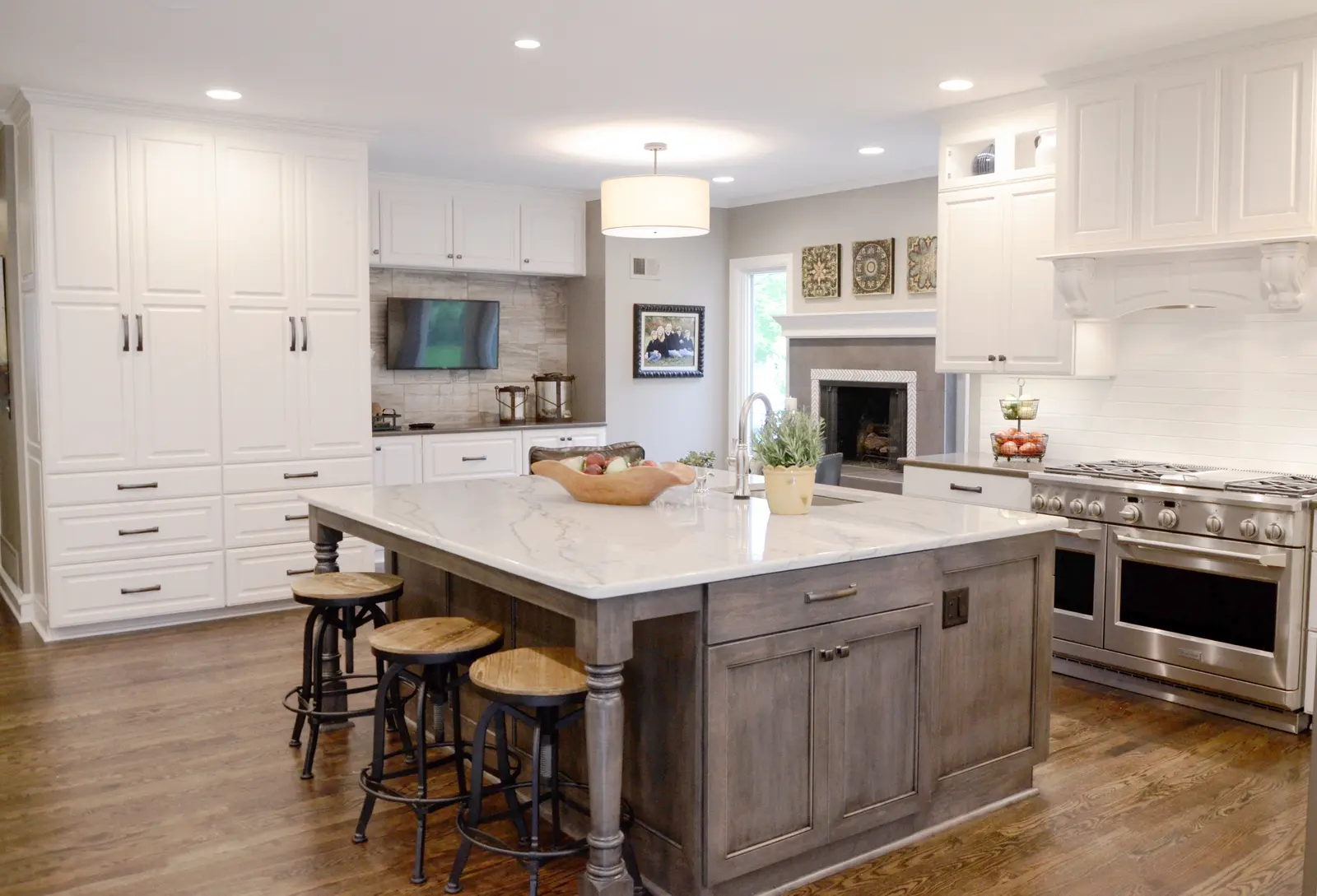
White kitchen cabinetry surrounding a gray island

Crown Cabinetry / Kansas City area

Shawnee cabinet refacing & selective custom work

A dated finish and a poorly working cabinet are different problems. Give each one the right solution.

Shawnee, Kansas

Look at eastern and western Shawnee differently

Achieve Shawnee calls attention to preserving existing housing, particularly older neighborhoods east of I-435. Other parts of the city bring later development into the mix. That distinction is a reason to inspect the room carefully, not to assume every eastern kitchen is original or every western kitchen has the same builder cabinets. A golden oak finish is one possible starting point, not a description of the whole city.

Housing context: Achieve Shawnee

Separate appearance from construction

Golden oak doesn't tell the whole story

If the doors are the part you dislike, look inside before deciding to replace everything. Suitable boxes may support a refacing plan with a different door profile and finish. If the interior is damaged, the drawers are poorly sized or the layout has never worked, new fronts alone won't resolve those issues.

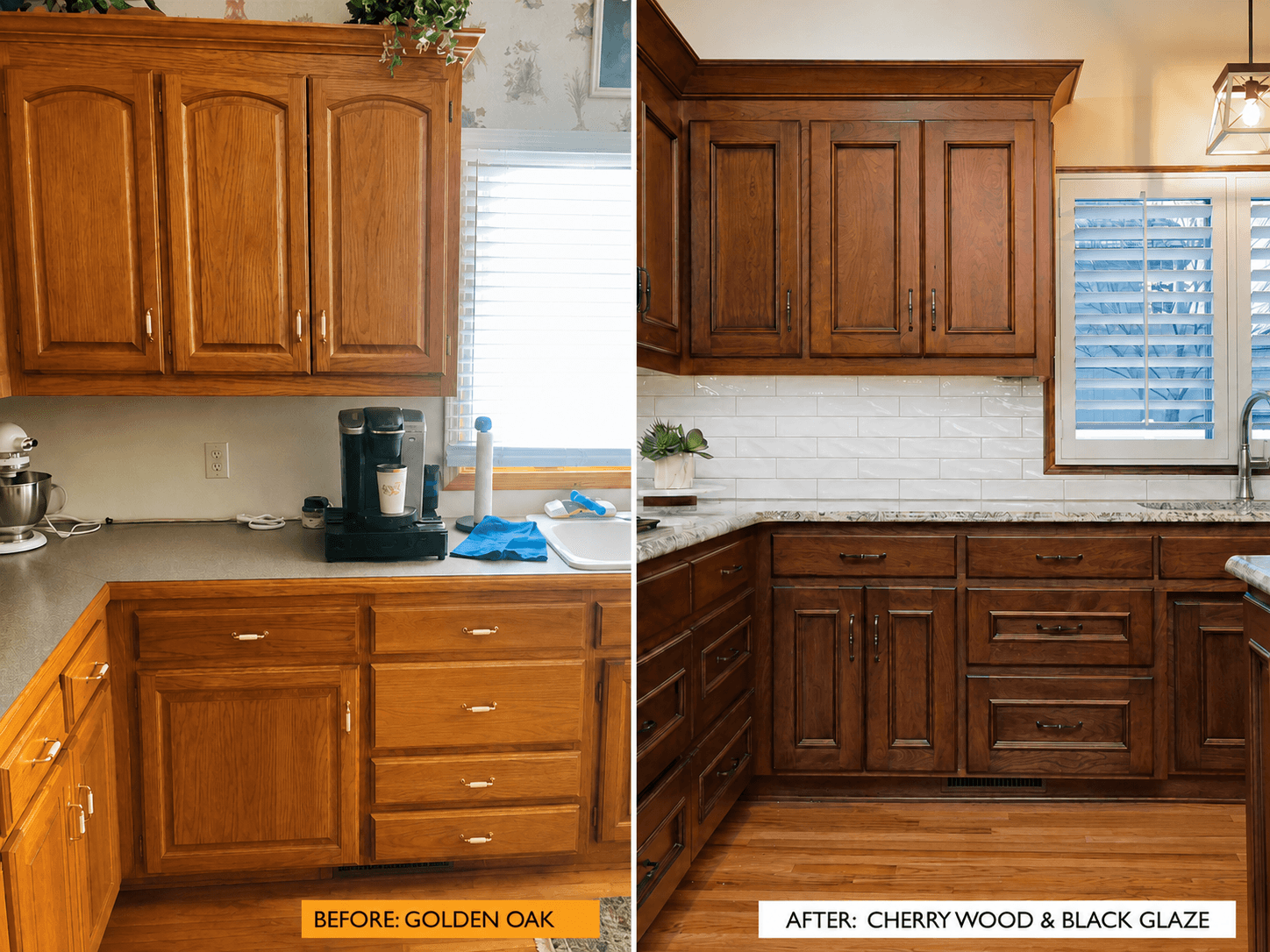
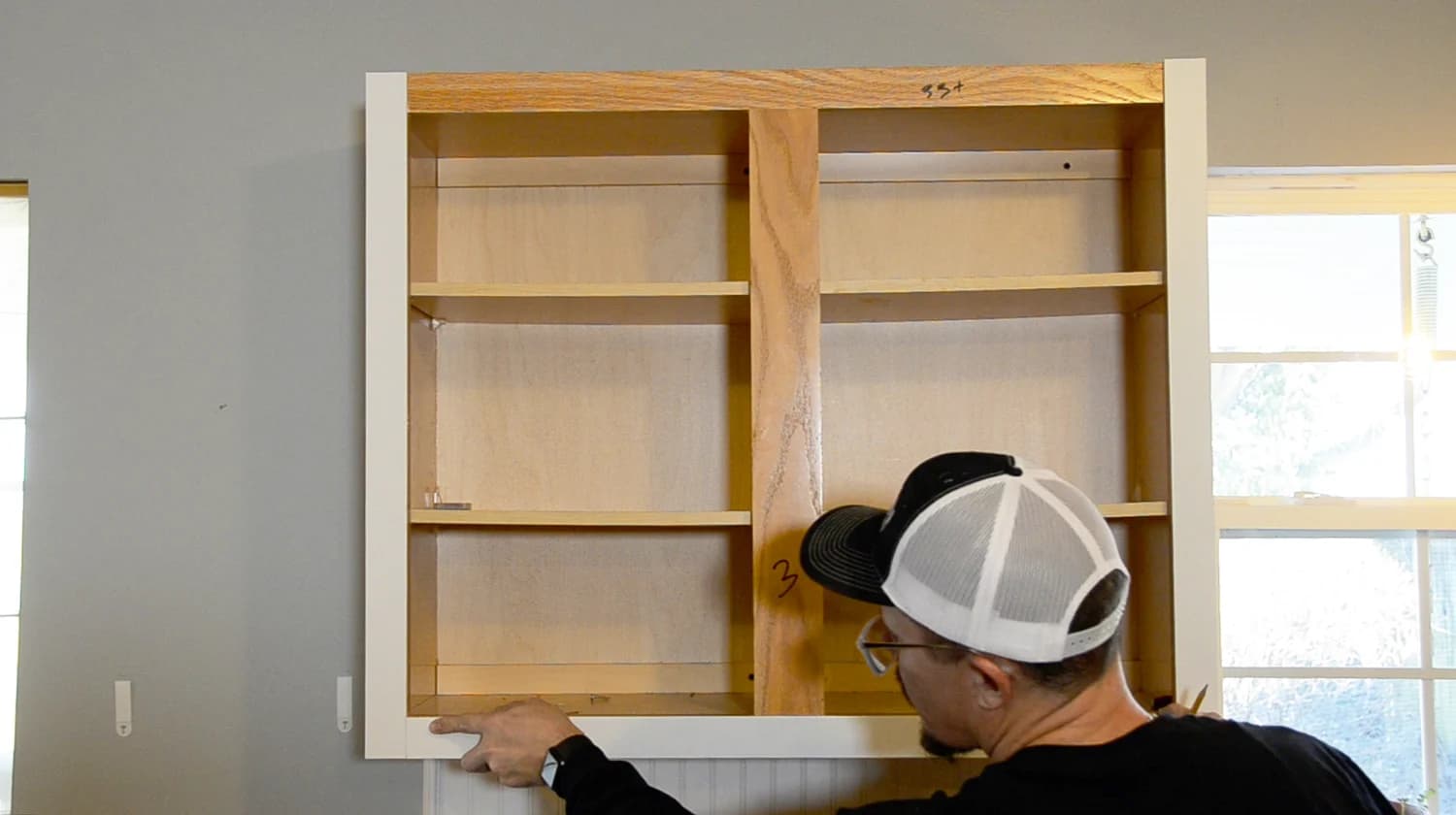
Crown's before-and-after comparison below documents a golden-oak-to-cherry refacing transformation. The process photograph shows work on the cabinet frame behind the fronts. Together they explain why refacing is more than choosing a new coating for the old doors. The existing cabinet still needs to be suitable for the work.

Crown before-and-after comparison of golden oak cabinets and cherry refacing
Crown refacing comparison: golden oak before, cherry with a darker glaze after.
Crown installer working on an exposed cabinet frame during refacing
Refacing includes the exposed cabinet frame as well as replacement fronts.
Explore a refacing scope beyond a paint change

A cabinet-by-cabinet assessment

Keep, improve or replace

A kitchen doesn't need one answer for every box. A useful perimeter, an inconvenient pantry and a damaged sink cabinet may call for different work. The important part is to design the result together, with clear boundaries between retained and new cabinetry.

01

Keep the useful structure

Sound, securely installed cabinets in the right locations may be candidates for refacing. Review every visible end and trim transition, not only the front doors.

The scope should state which boxes remain and which surfaces receive new material.
02

Improve access

Compatible drawers, roll-outs or revised shelving may make retained cabinets easier to use. Interior dimensions and obstructions decide which upgrades fit.

Check usable width after hardware, rather than relying on the outside cabinet dimension.

03

Replace the problem pieces

A damaged cabinet, a poorly proportioned island or a pantry in the wrong configuration may need new construction. If problems extend across the whole room, compare a full custom plan.

Confirm the countertop, flooring and utility implications of every changed cabinet run.

Compare selective replacement with a full remodel
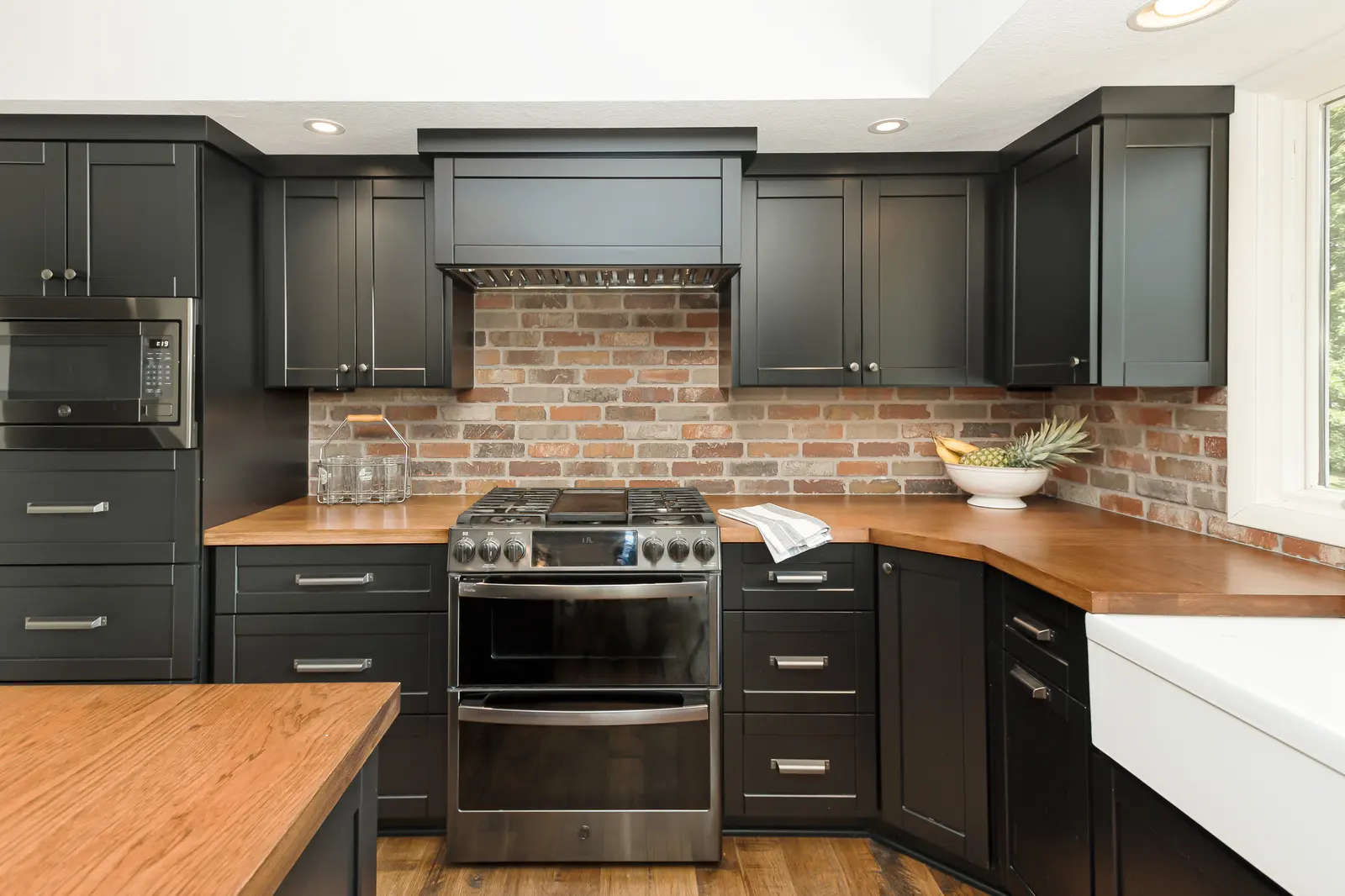
Charcoal cabinetry beside a brick backsplash
Crown work: cabinet finish and surrounding materials considered together.

The island as a working cabinet

More drawers can matter more than a larger footprint

In a generous suburban kitchen, the first instinct may be to enlarge the island. Before doing that, decide whether the current problem is capacity, access or circulation. An island with doors and hard-to-reach shelves may need a different interior, not more floor area.

A custom island can address a changed seating arrangement, appliance location or storage brief. Measure the room with the dishwasher and refrigerator open, then review the paths around the proposed design. A larger island should earn its space rather than becoming another obstacle.

Discuss a custom island or new cabinet run

Build around ordinary use

Pick the improvement you'll notice every day

A storage plan should begin with the kitchen's repeated inconveniences. It might be a pantry that hides food, a base cabinet that requires unloading or a cleanup zone with nowhere for recycling. Solve the high-frequency problem first.

Pantry visibility

Group food by package height and frequency of use. Adjustable spacing or pull-outs can make an existing pantry more practical, but the opening and hardware need to suit the contents.

Cookware access

Put heavy cookware where it can be reached safely and directly. Drawer depth, usable width and the path around an open drawer matter more than the visual symmetry of the fronts.

Storage outside the kitchen

Some counter clutter belongs in a mudroom, closet or nearby built-in. Consider whether moving occasional-use items to another room would help before adding more kitchen cabinetry.

See drawer, pantry and pull-out options

Make proposals comparable

Put the retained and new work on the same plan

A selective project needs more than a door count. Crown should be able to discuss the existing conditions, the new pieces and the way they meet. That helps you compare a refacing proposal with a custom alternative without confusing different scopes.

Read the factors that shape a refacing quote
  1. 01

    Show the condition

    Photograph interior wear, loose connections or moisture damage. Mention any cabinet that has been repaired before so the assessment starts with the relevant history.

  2. 02

    List what you're keeping

    Counters, flooring and appliances can affect the feasible scope. Their retention needs review, especially around a replaced sink base or reshaped island.

  3. 03

    Review every visible transition

    Check end panels, toe kicks, crown, fillers and the back of an island in the proposal. Those surfaces connect the new fronts to the rest of the kitchen.

Helpful answers

Questions about changing selected parts of a kitchen

01

Can golden oak cabinets look different without replacing the whole kitchen?

If the boxes and layout are suitable, refacing can change the doors, drawer fronts and exposed surfaces rather than simply recoating the old doors. Crown can discuss profiles and finish directions after evaluating construction. A dated stain alone doesn't establish whether replacement is necessary.

02

What if only my sink cabinet is damaged?

That cabinet needs a condition assessment, including the cause of the damage. Selected replacement may be possible, but the surrounding cabinets, countertop supports and plumbing relationship affect the plan. Don't assume a new front addresses an underlying moisture or structural problem.

03

Can I keep my island's size but change its storage?

Possibly. The existing construction and internal dimensions determine whether drawer or accessory changes can fit. If the desired layout needs different openings or appliance space, a new island within a similar footprint may be worth comparing.

04

How do I compare refacing with painting my existing cabinets?

Painting generally changes the coating on existing parts. Crown's refacing approach replaces fronts and addresses exposed cabinet surfaces, allowing a different profile and a broader visual change. Compare the actual surface preparation, materials, hardware and retained parts in each proposed scope.