Crown Cabinetry
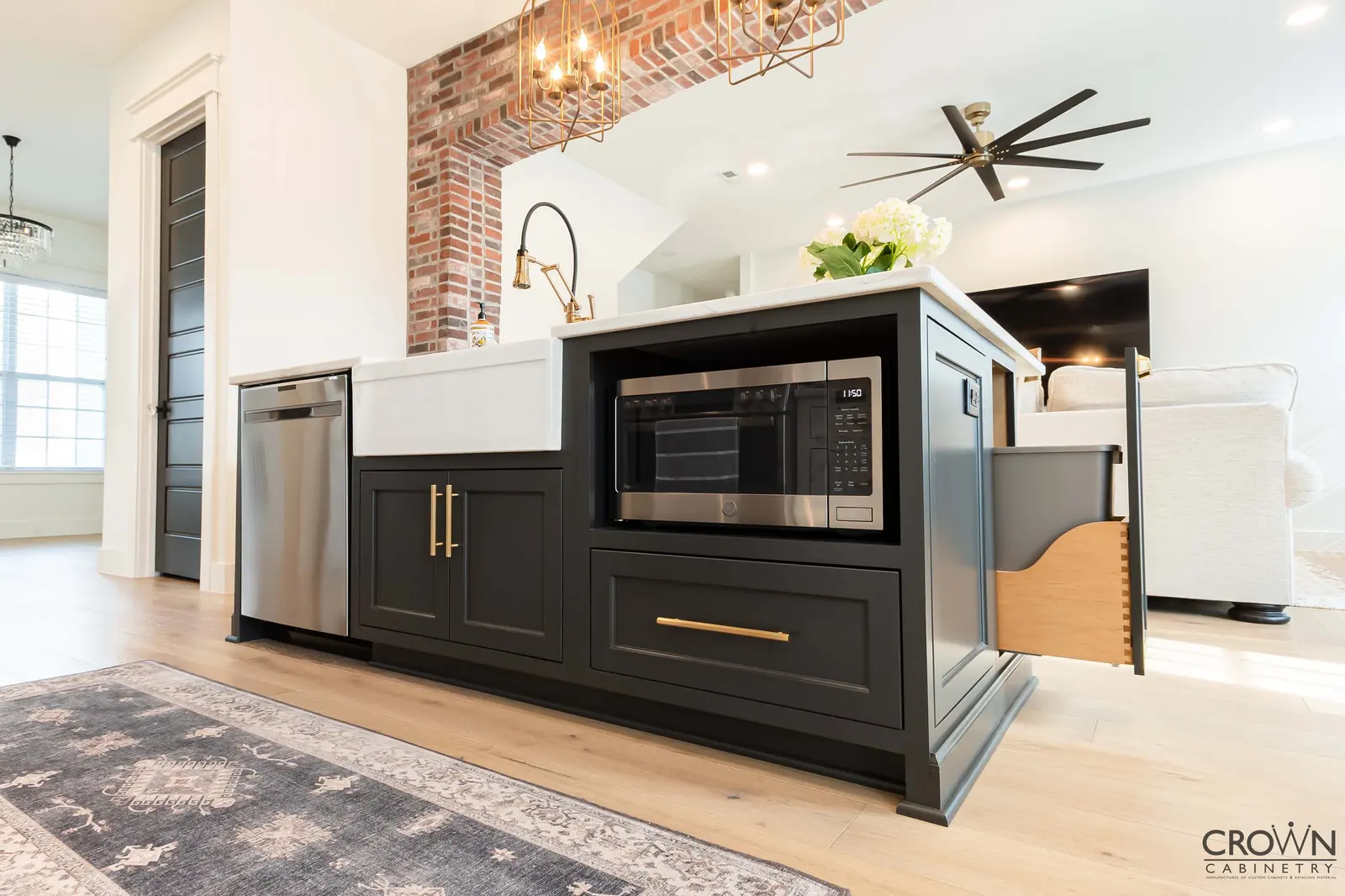
Black kitchen island with brass hardware beneath a brick arch

Crown Cabinetry / Kansas City area

Overland Park cabinet refacing & custom cabinetry

Different homes call for different cabinet decisions. Start with what your kitchen gets right, then decide what needs to change.

Overland Park, Kansas

One city, more than one kind of kitchen

Overland Park's comprehensive plan describes growth from north to south and changing development patterns. An established north or central home, a later suburban kitchen and a newer southern home can present very different remodeling questions. Age helps frame the conversation; it doesn't tell us whether a cabinet is worth keeping. We need to see its construction, condition and relationship to the room.

Housing context: FrameworkOP

Start with the house

Which part of the kitchen is holding you back?

The useful distinction isn't old versus new. It's a working footprint versus a room you're trying to reorganize. Open the doors, look under the sink and pay attention to the cabinets you avoid using. A dated front is a different problem from a damaged box or an awkward appliance location.

01

An established, enclosed kitchen

If the sink, range and refrigerator work well together, keeping the perimeter can protect a sensible footprint. Refacing changes doors, drawer fronts and exposed surfaces while retaining suitable cabinet boxes.

Check door swings, narrow passages and the cabinets beside windows before proposing more storage.
02

A generous suburban layout

A large room can still have a crowded island or hard-to-reach pantry. Separate the useful perimeter cabinets from the one element that causes daily friction.

A new island or pantry may belong in the same plan as refacing, subject to dimensions and finish coordination.

03

A newer home that feels unfinished

Newer cabinetry isn't automatically a keeper or a replacement candidate. Look at drawer capacity, appliance clearances, exposed end panels and how the kitchen connects to adjacent rooms.

Choose improvements for the way you live, not simply because a different door style is available.

Compare refacing with cabinet replacement
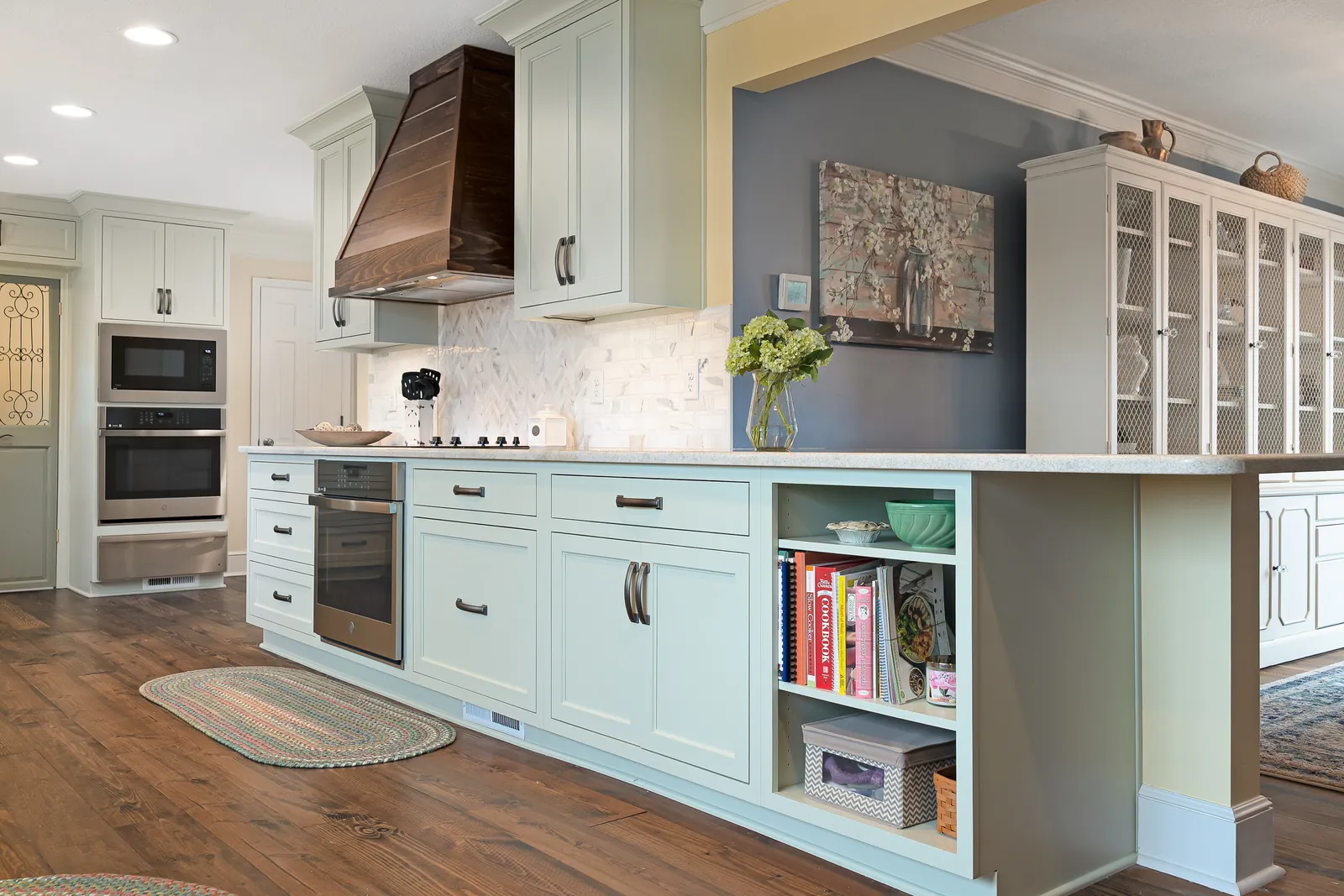
Muted blue island cabinetry beneath a copper-toned range hood
Crown work: the hood, cabinets and surrounding trim read as one composition.

Evaluate what stays

Keep the layout, change the room's expression

Oak, maple, painted and stained fronts all need the same first question: what's behind them? Crown evaluates the boxes, attachment points and exposed surfaces before recommending refacing. Door style and finish come after that assessment, not before it.

A visual update also includes the ends of an island, the refrigerator surround, crown molding and toe kicks. Leaving one of those surfaces out of the scope can make the kitchen feel partially finished. We'll discuss how new fronts meet the parts you're keeping, including counters and flooring. Keeping those finishes is a project-specific decision, never a blanket promise.

See what Crown's refacing process includes

Change the daily routine

More useful storage, not just more cabinets

Before adding an island cabinet, decide what will live there. A place for sheet pans, everyday dishes or the microwave changes drawer depth, clearances and the surrounding work surface. Those decisions matter more than the number of new doors.

The island

Check seating, appliance doors and the path around an open dishwasher. An island can gain drawers without growing; a larger island can make a previously comfortable room harder to use.

The pantry

Start with the tallest and heaviest items you actually store. Roll-outs improve access only when their clear openings and load requirements suit those items.

The boundary with the next room

A cabinet end facing a dining or living space deserves the same attention as the front. Carry a considered finish or panel detail around that edge instead of treating it as leftover space.

Explore pantry and drawer storage options

Look beyond a door sample

Make the new work belong to the house

Use the existing floor, nearby millwork and natural light to narrow the finish palette. The answer might be a quieter painted perimeter, a distinct wood island or a consistent stained treatment. It doesn't have to make every surface identical.

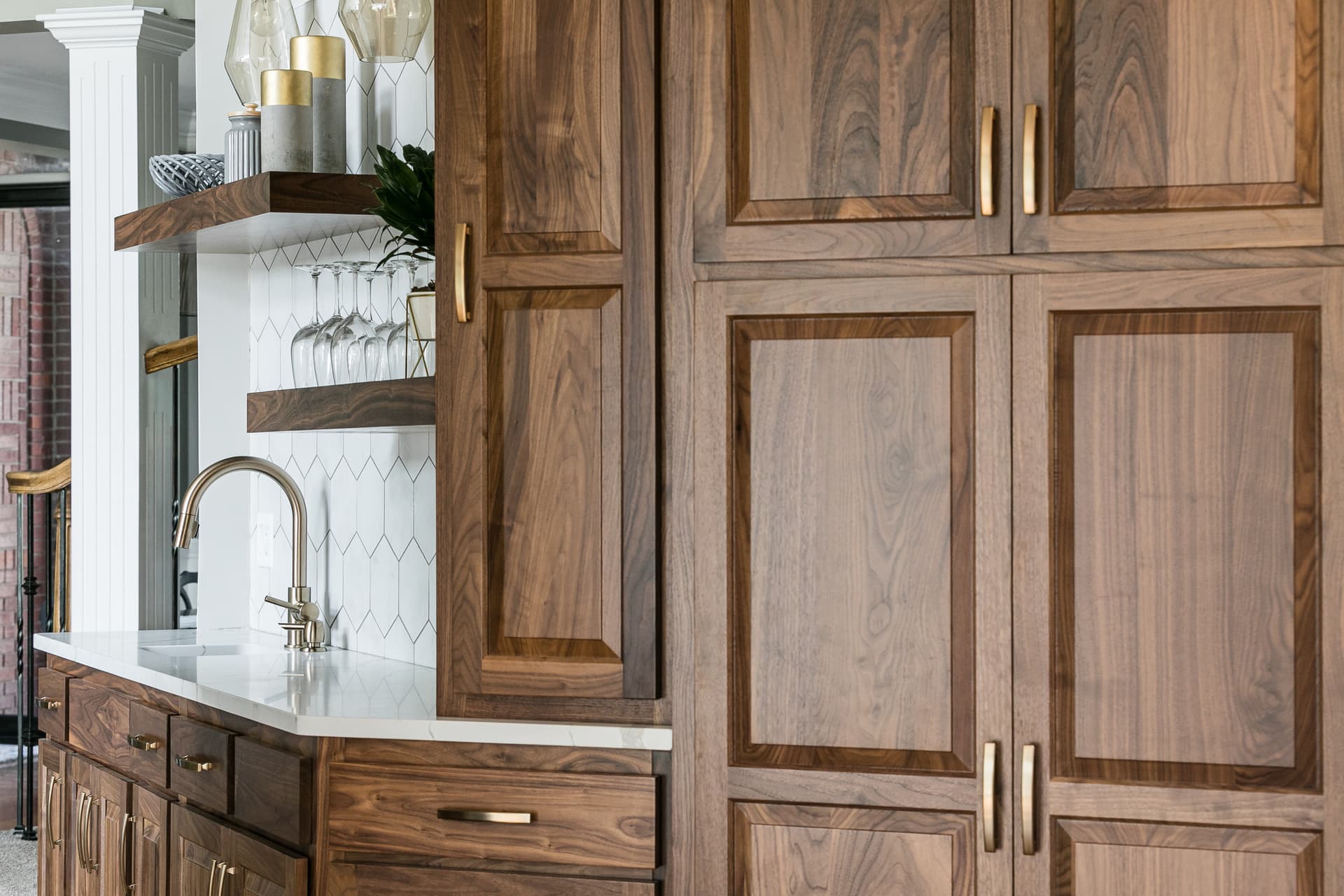
Notice how the walnut grain relates to the brass hardware in Crown's cabinet detail below. A finish selection should account for those smaller relationships as well as the broad view. Bring photographs of adjoining spaces so their materials become part of your design conversation.

Walnut cabinetry with brass handles
Walnut grain and brass hardware in Crown cabinetry.
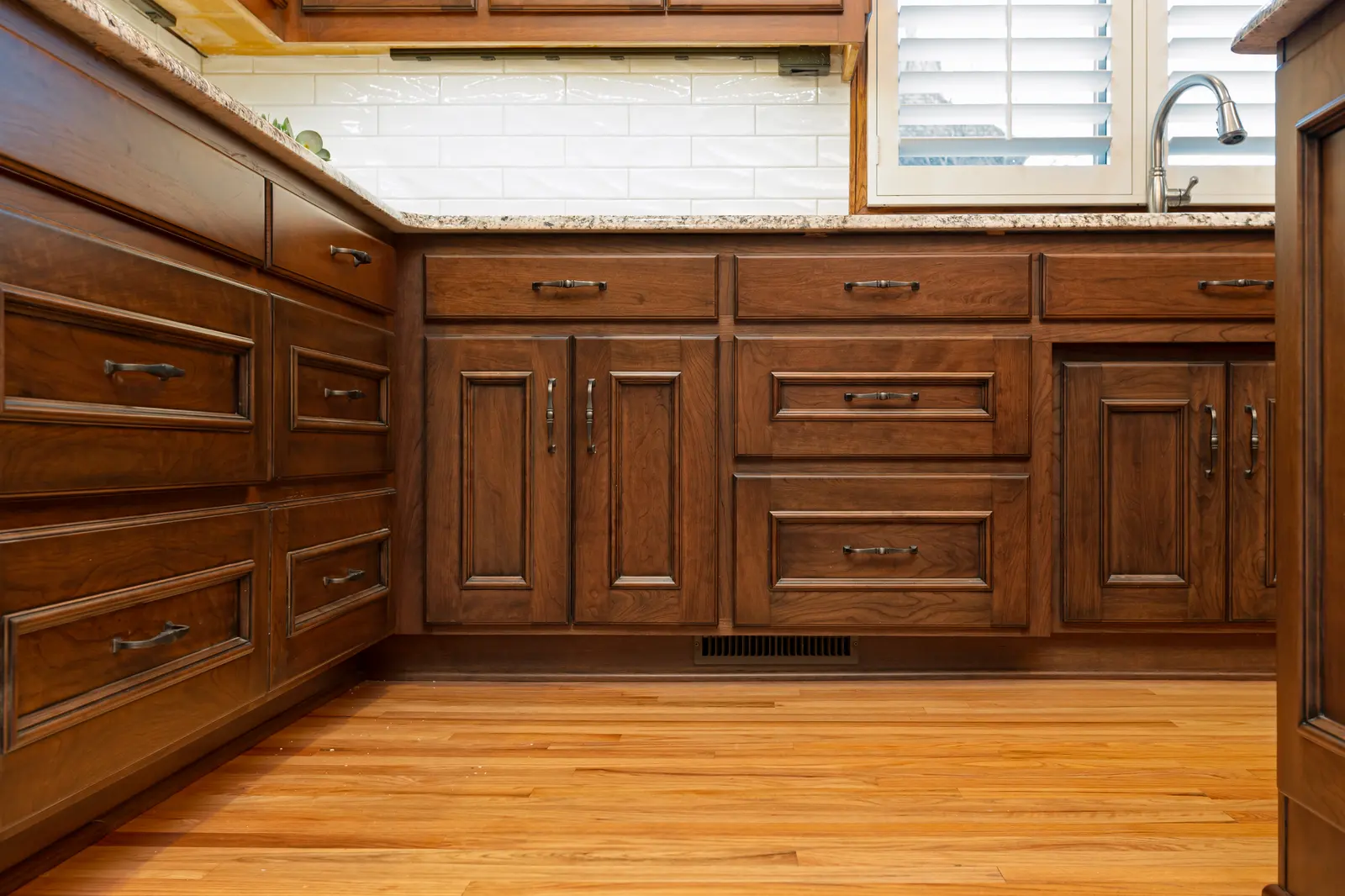
Dark stained kitchen cabinetry around the cooking area
A continuous stained finish across a Crown kitchen.
Compare cabinet finish directions

A useful first meeting

Decide the scope before the finish

If walls are moving, appliances are relocating or several cabinet runs need different dimensions, a custom plan may be the more coherent answer. Crown builds custom cabinetry in its Abilene, Kansas shop and coordinates the design through the Blue Springs showroom.

  1. 01

    Mark the keepers

    List the counters, floors, appliances and cabinet runs you'd prefer to retain. Flag any water damage or loose joints so condition is part of the discussion.

  2. 02

    Name the interruptions

    Photograph an open dishwasher, a crowded pantry and the island during normal use. Those images explain layout problems more clearly than a collection of inspiration pictures alone.

  3. 03

    Compare defined scopes

    Ask for a clear distinction between refacing, selective new cabinetry and a full custom layout. Use the cost guide as background, then compare a proposal tied to your actual doors, surfaces and changes.

Understand what drives a refacing quote

Helpful answers

Questions about your Overland Park kitchen

01

Can newer builder cabinets be refaced?

Sometimes. Their age or original price doesn't settle the question. Crown needs to evaluate the boxes, fasteners, surface condition and layout. If the underlying cabinets are suitable and the room works, new fronts and exposed surfaces may be a useful option. Damage or the wrong dimensions can point toward replacement.

02

Can I keep my countertops while changing the cabinets?

That depends on the cabinets, countertop installation and proposed changes. Keeping perimeter boxes may make retention possible, but moving a sink, altering supports or replacing an island changes the assessment. Tell us which surfaces matter to you before the scope is developed.

03

Should the island match the rest of the cabinetry?

It doesn't have to. A contrasting finish can distinguish the island, while shared door proportions or hardware connect it to the perimeter. Compare samples beside your floor and counters rather than deciding from isolated online colors.

04

Is an Overland Park consultation at home or at the showroom?

You can start with an in-home, showroom or virtual consultation through Crown's contact page. Seeing the kitchen helps with condition and layout; the Blue Springs showroom helps with physical door, finish and storage selections. There's no separate Overland Park storefront.