
From the shop
Can You Update Kitchen Cabinets Without Replacing Countertops?
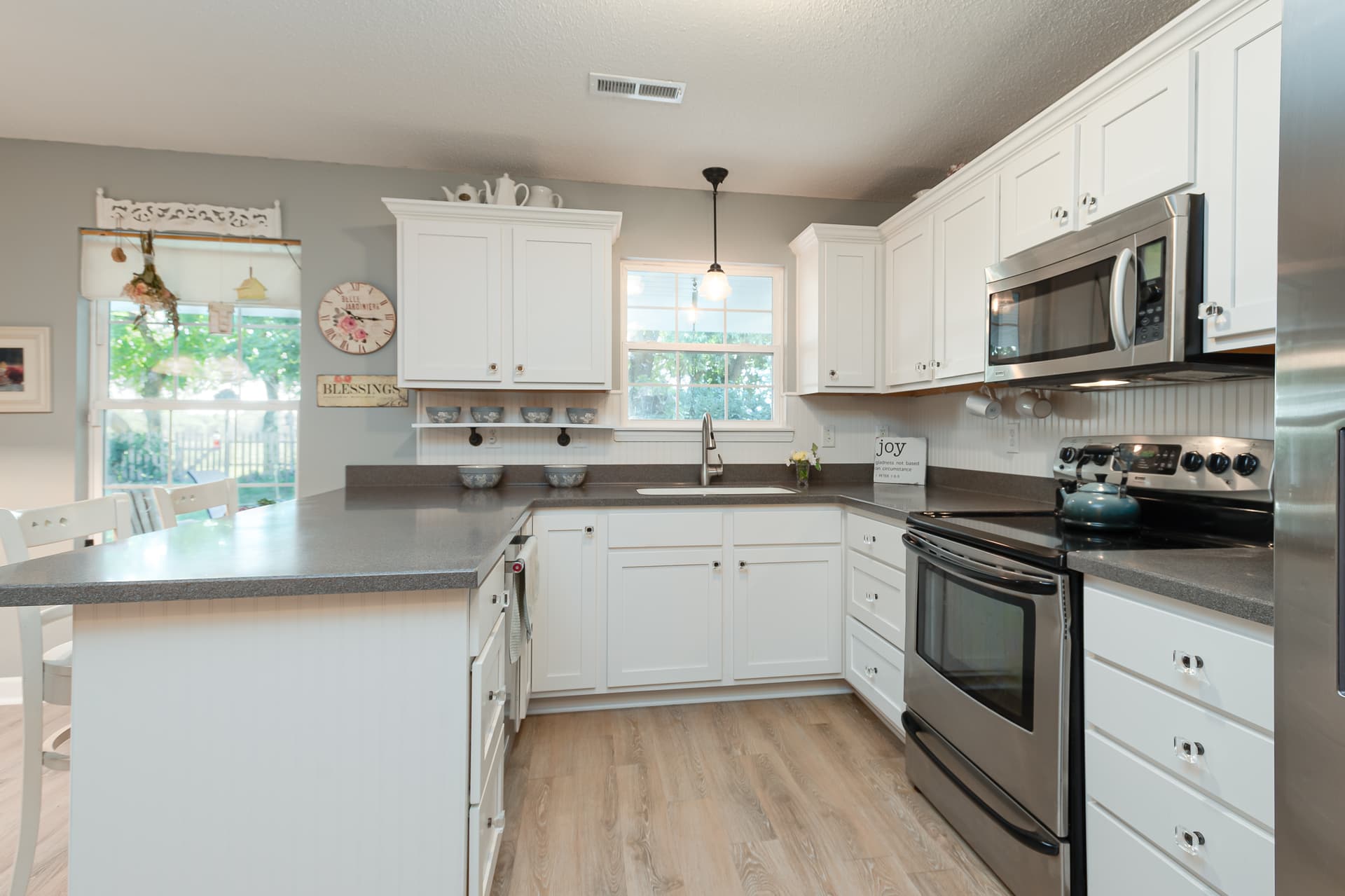
Yes. If your cabinet boxes are structurally sound and the layout still works, cabinet refacing can update the doors, drawer fronts, and exposed cabinet surfaces while your countertops stay in place. Removing and replacing the cabinet boxes beneath an existing countertop is a different project, with additional support and damage concerns.
That distinction matters when you like your granite or quartz but the cabinets underneath it are ready for a change. You may be able to keep a substantial part of your kitchen and still get the new look and better storage you want.
Start by deciding what needs to change: the cabinet surfaces, what happens inside the cabinets, or the layout of the room. Those answers will tell you whether keeping the countertops is a practical plan.
Refacing and replacing cabinets affect countertops differently
Cabinet boxes are the structures attached to your walls and sitting beneath your counters. Doors and drawer fronts are the pieces you see and open. A cabinet reface changes the visible finishes and fronts while retaining suitable boxes.
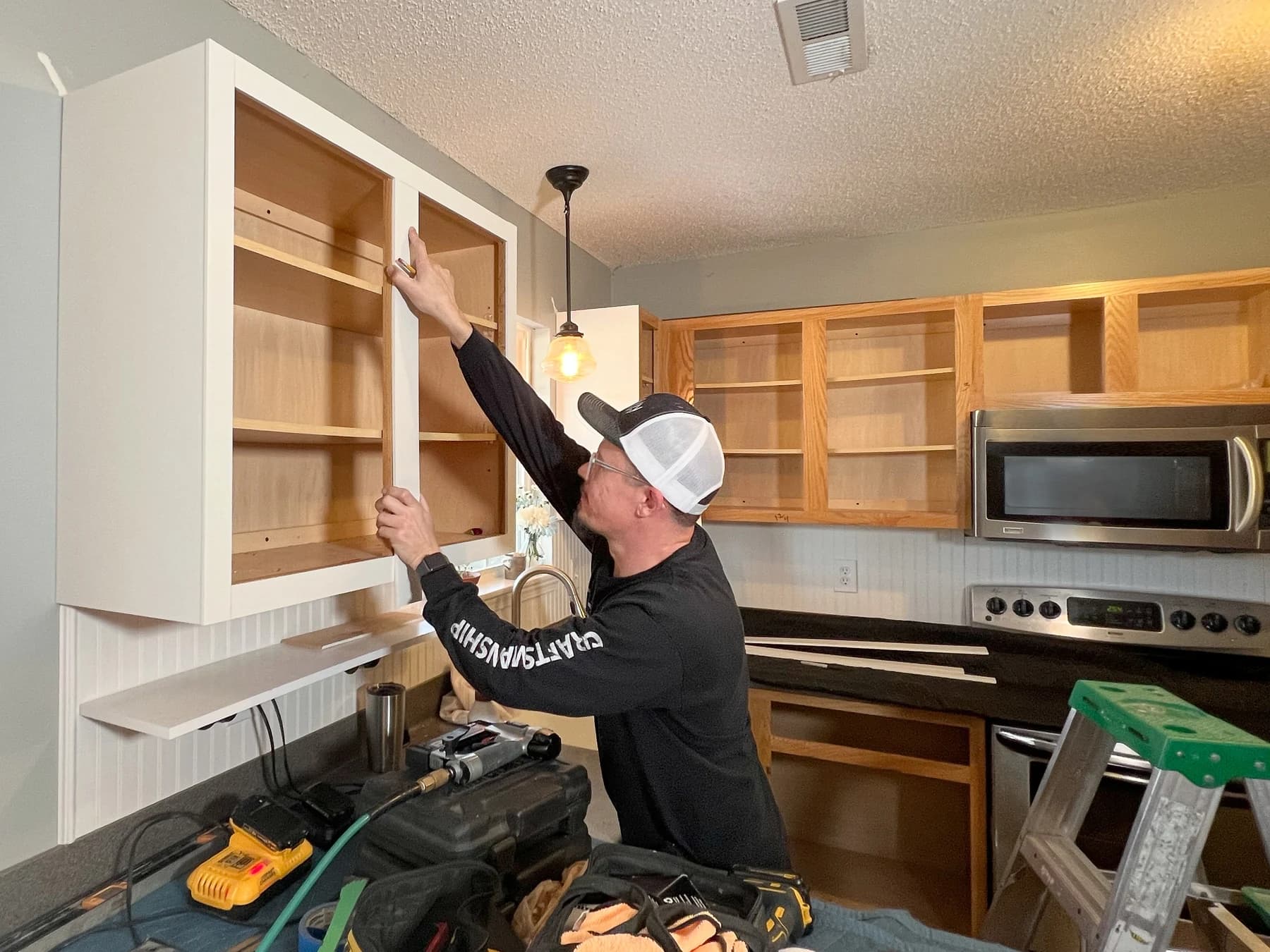
At Crown, premium cabinet refacing includes quarter-inch real-wood material over exposed cabinet surfaces, with new doors, drawer fronts, trim, and hardware. The cabinets supporting the counters remain in place.
Full cabinet replacement removes those structures. Keeping the same granite or quartz during that work may be possible in some kitchens, but it requires an assessment of the slab, seams, cutouts, attachments, and supporting cabinetry. A countertop professional should help evaluate that plan before demolition.
| Your project | What happens to the cabinet boxes | What to expect for countertops |
|---|---|---|
| Change the cabinet color | Boxes and doors typically stay | Counters can usually stay protected in place |
| Reface suitable cabinets | Boxes stay; visible surfaces and fronts change | Keeping counters in place is often practical |
| Add storage inside suitable cabinets | Boxes may stay, depending on the modification | Counter removal may be unnecessary |
| Replace base cabinets | Existing boxes come out | Counter support and possible removal need a separate plan |
| Change the footprint or move the sink | Cabinet locations or dimensions change | Existing countertops may no longer fit the design |
For the broader cabinet decision, see our refacing versus replacing guide.
Check the cabinets before choosing the new finish
A countertop you love is a good reason to investigate refacing. It is not a reason to ignore failing cabinets.
Look inside the sink base, around the dishwasher, and along cabinet bottoms. Take photos of swollen material, separated joints, sagging shelves, staining, or places where fasteners no longer hold. A stain alone does not establish structural damage, but it gives your designer something to inspect.
Consider these questions:
- Are the boxes firmly installed, with intact sides and bottoms?
- Is any water damage old and contained, or is a leak still active?
- Do doors hang poorly because of worn hinges, or because the surrounding material is damaged?
- Are the cabinets reasonably square, or do drawers bind because the structure has shifted?
- Do you actually like where the sink, appliances, and work surfaces are located?
New surfaces cannot repair a leak or make a deteriorated cabinet dependable. Sometimes a limited repair or replacement can be incorporated into a larger plan. Other kitchens need new cabinetry. Have that conversation before you invest in new doors and finishes.
Can granite or quartz stay in place during cabinet refacing?
Often, yes. Retaining the cabinet boxes avoids removing the main structures supporting the countertop. That is one reason refacing is useful when the counters are relatively new or still suit the room.
The installation plan still needs to account for the edges of the counters, the sink area, exposed cabinet ends, and the meeting points between existing surfaces and new materials. Protective coverings and careful work matter even when no slab is being removed.
If the proposal includes replacing a cabinet under a sink, altering a support, or changing an island, ask how that part of the work affects the countertop. Those are additional scope decisions, even if the rest of the kitchen is being refaced.
Avoid a blanket promise that an existing slab can always be removed and reused without damage. Its condition and installation history matter. Keeping it supported in place and lifting it off the cabinets are very different circumstances.
What can improve while the countertops stay?
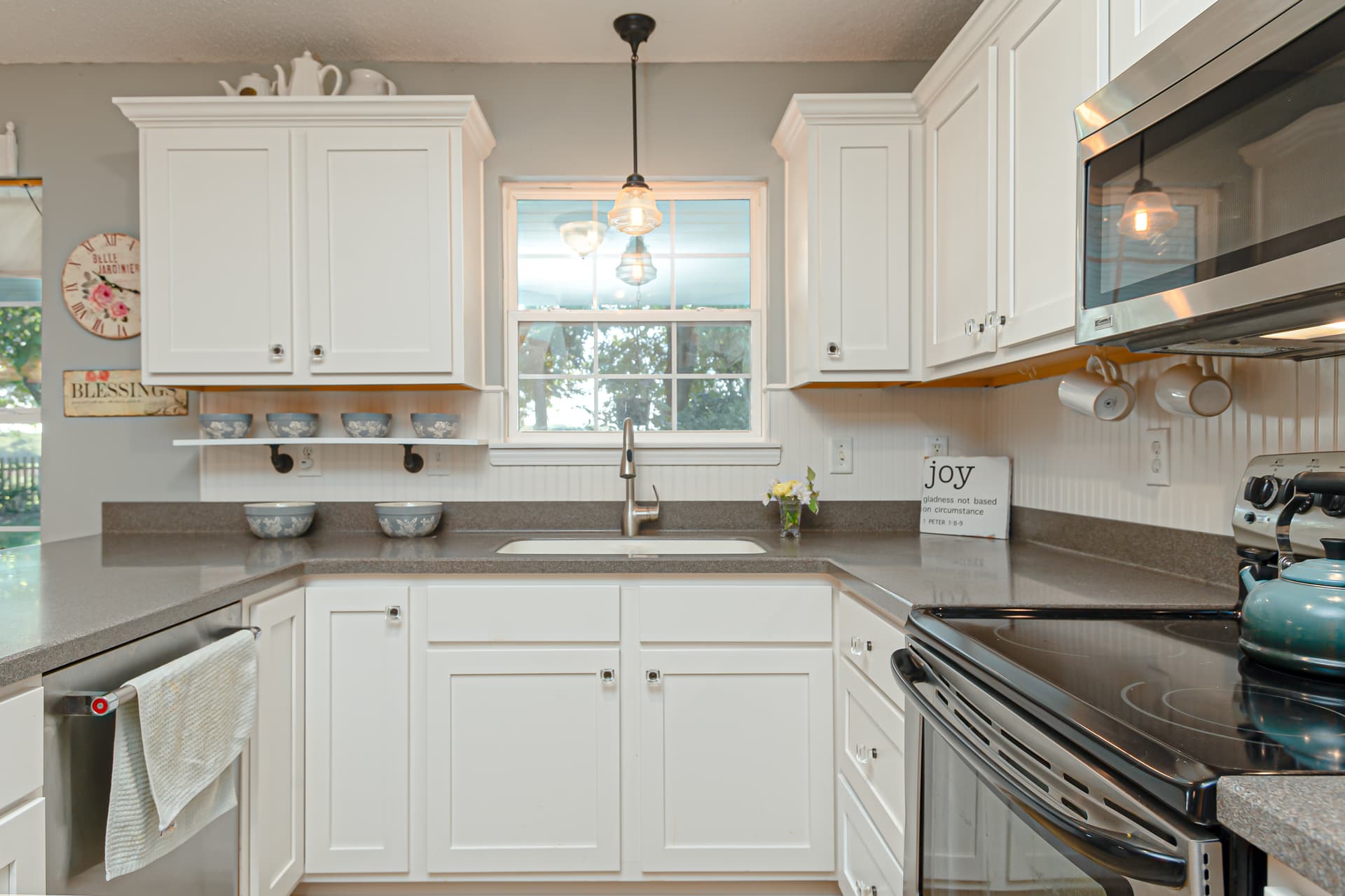
Keeping the counters does not limit you to changing a paint color. With appropriate existing cabinetry, a project can address several everyday frustrations.
Door style and finish. A new profile can change the character of the kitchen. Painted and stained options also let you coordinate the cabinets with the surfaces you already have.
Drawer performance. Worn drawer boxes or slides can be evaluated for replacement. A sticking drawer should be investigated rather than assumed to need only a new front.
Lower cabinet storage. Suitable cabinets may accept pull-outs or a conversion from doors and shelves to deep drawers. The cabinet opening, interior, and surrounding clearances determine what fits.
Hardware and trim. New pulls, knobs, hinges, and coordinated trim help the finished cabinetry read as one project.
A separate island or pantry. In some rooms, a new cabinet element can be added while the perimeter cabinetry and its counters remain. A new island needs its own countertop plan and enough room for circulation and appliance use.
Bring a list of the cabinets that frustrate you most. A beautiful kitchen still needs somewhere sensible for the frying pans.
Use the existing countertop to narrow your cabinet choices
If the counters are staying, choose the new cabinet finish alongside them.
A warm, patterned granite might pull different tones from a paint sample than a quiet white quartz does. A natural wood finish also brings its own grain and color variation. Looking at either one by itself can hide a mismatch until installation.
Start with two or three door samples. Hold them vertically beside the countertop so you see them in the orientation they will occupy. Compare them in daylight and under the lights you use at night. Include the floor and backsplash in that view.
Try to identify what you like about your favorite inspiration photo. Is it the cabinet color, the grain, the door profile, or the amount of frame showing between doors? Crown refacing uses standard half-inch overlay, so a full-overlay inspiration kitchen will have different proportions. Our door overlay guide explains that distinction.
What about the backsplash and flooring?
They can often remain when the cabinet boxes and footprint stay put. The details still belong in the project review.
A backsplash may meet an end panel, underside, or trim piece that will be changed. New material has thickness, and the transitions should be planned. Flooring at a toe kick or cabinet end also needs to meet the finished cabinetry neatly.
If you plan to replace the backsplash later, mention it now. The same applies to a future dishwasher, range, or sink. An appliance opening or countertop cutout that fits the current item may not fit the replacement you have in mind.
You do not have to make every purchase at once. You do need the design to account for the changes you already intend to make.
Compare complete project scopes when budgeting
The cost advantage of keeping countertops comes from work and materials you can avoid. Your actual savings depend on what the alternative project would include.
Ask for a written scope that distinguishes retained cabinetry, refaced surfaces, new cabinets, drawer upgrades, countertop work, plumbing, and backsplash work. Comparing only the price of doors with the price of a complete remodel will not tell you which proposal fits your needs.
Use Crown's Kansas City cabinet refacing cost guide for current project guidance. Countertop purchases are separate from Crown's refacing quote, so a plan that adds new counters should budget for the selected supplier as well.
Helpful answers
Questions about keeping existing countertops
Can I replace only the upper cabinets?
Potentially. Upper cabinets usually do not support the kitchen countertop, but removing them can affect the backsplash, wall finish, lighting, and alignment with nearby cabinets. A mixed project should coordinate the retained base cabinets with the new uppers.
Can I change my sink without replacing the countertop?
Sometimes. The existing cutout, sink mounting method, surrounding material, and plumbing affect the options. Check the exact replacement sink with a countertop professional before ordering it. Refacing the cabinets does not automatically make a different sink fit.
Can I replace my countertops after refacing?
Yes, it can be planned that way. Tell the designer about the future work so cabinet modifications, trim details, and surface protection can be coordinated. If you already expect to change the sink or appliance layout, settle those decisions before finalizing the reface.
Will I be able to use my kitchen during the work?
Crown's refacing process keeps the kitchen functional through much of installation, but access can vary by the day's work and any additional trades involved. Ask which appliances and work areas will be available and when. Plan meals around the actual installation schedule.